DragonStation and DragonBay AI NAS Systems

· 5 min read

Radxa introduces upcoming Qualcomm-powered AI NAS systems with Fygo OS pre-installed.

DragonStation and DragonBay AI NAS Systems

Shenzhen, China — June 3, 2026 — Radxa today announced that its upcoming AI NAS products, DragonStation and DragonBay, will ship with Fygo OS pre-installed, providing users with a complete private cloud and local AI experience right out of the box.

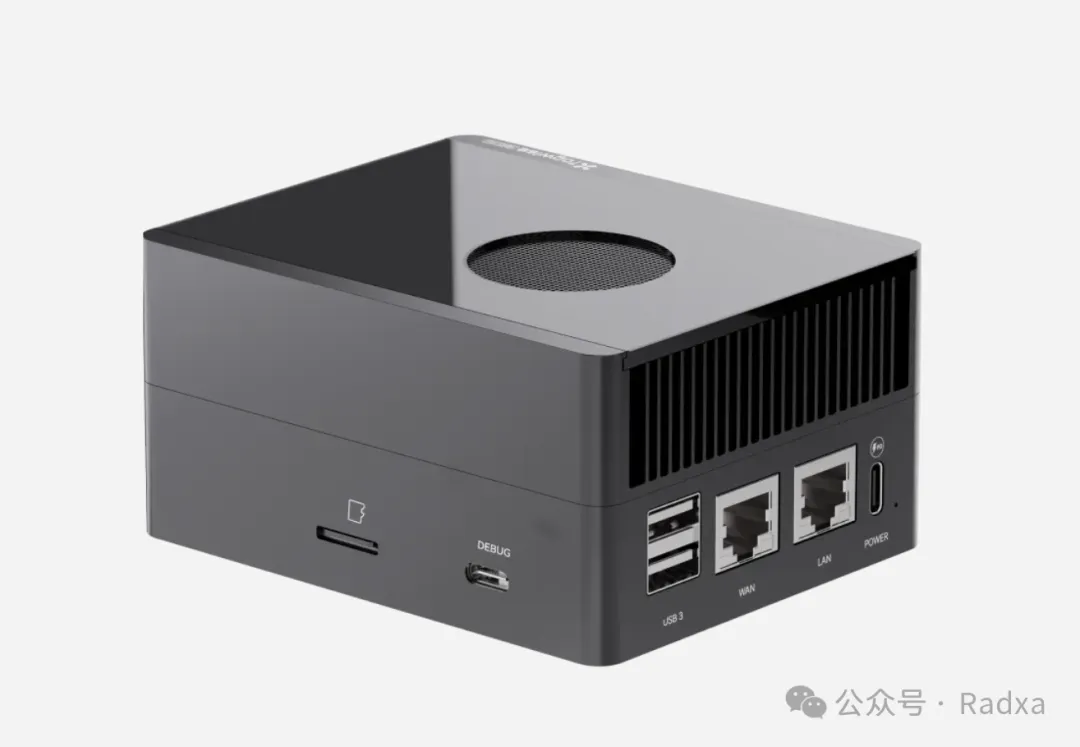
Built on Qualcomm's high-performance computing platform, DragonStation and DragonBay combine powerful hardware with the intelligent software capabilities of Fygo OS, enabling users to securely store, manage, search, and interact with their data while maintaining full ownership and privacy.

As AI workloads increasingly move from the cloud to local infrastructure, users need systems that can not only store data, but also run AI services, process media, and support modern personal and team workflows. DragonStation and DragonBay are designed to meet that need.

DragonStation: All-Flash AI NAS and Local AI Workstation

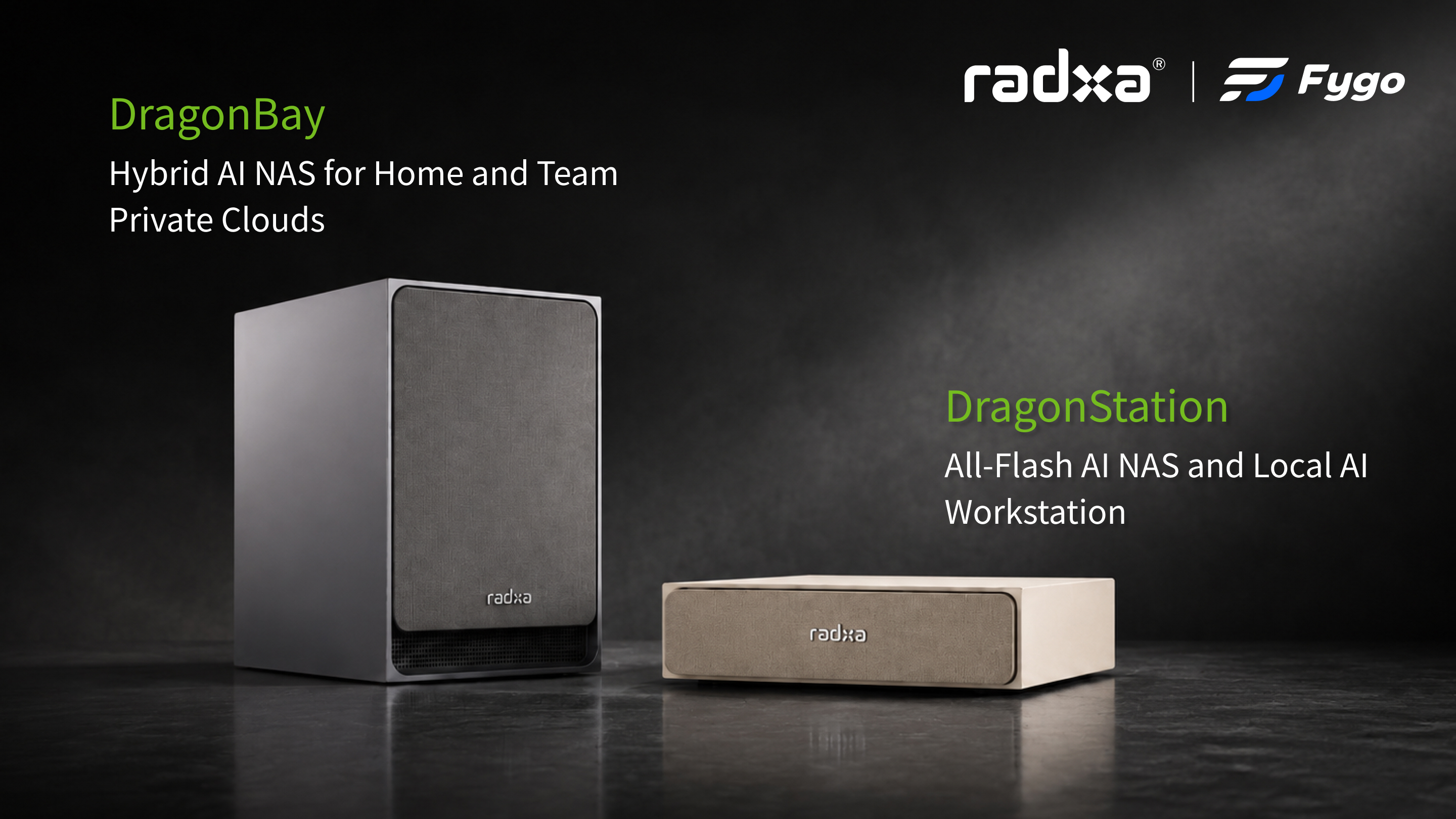
DragonStation is an all-flash AI NAS designed for developers, creators, AI enthusiasts, and professional users who require both high-performance storage and local AI computing.

Featuring six NVMe SSD slots, dual 10GbE networking, and Qualcomm-powered computing, DragonStation delivers the speed required for AI datasets, model libraries, media production, and real-time workloads.

Key features include:

  • 6x M.2 NVMe SSD slots
  • Up to 48TB all-flash storage
  • Dual 10GbE networking
  • Qualcomm Snapdragon computing platform
  • Optional AI accelerator expansion up to 320 TOPS
  • Support for local deployment of AI models up to 120B parameters
  • CNC aluminum enclosure
  • Expandable magnetic front-panel ecosystem

More than a traditional NAS, DragonStation acts as a local AI data hub where storage, models, and inference coexist on a single device.

With support for high-performance AI accelerator expansion, DragonStation can power a wide range of AI-native applications, including:

  • Personal AI assistants
  • Retrieval-Augmented Generation (RAG)
  • Knowledge base search
  • AI-powered content creation
  • Autonomous AI agents
  • Local large language model deployment

By keeping both data and AI processing local, DragonStation delivers lower latency, reduced cloud dependency, and greater privacy for sensitive information.

DragonBay: Hybrid AI NAS for Home and Team Private Clouds

DragonBay is designed for users who prioritize large-capacity storage while still benefiting from modern AI-powered services and private cloud functionality.

Combining HDD storage with NVMe acceleration, DragonBay provides a balanced solution for media libraries, backups, file sharing, and local AI applications.

Key features include:

  • 4x HDD drive bays
  • NVMe SSD acceleration
  • Up to 140TB+ storage capacity
  • Dual 2.5GbE networking
  • Qualcomm Snapdragon computing platform
  • CNC aluminum enclosure
  • Expandable magnetic front-panel ecosystem

DragonBay is ideal for families, creators, and small teams looking to build a private cloud capable of storing photos, videos, documents, and AI-generated content while maintaining full control over their data.

Powered by Fygo OS

Both DragonStation and DragonBay come with Fygo OS pre-installed, eliminating the complexity often associated with NAS setup and deployment.

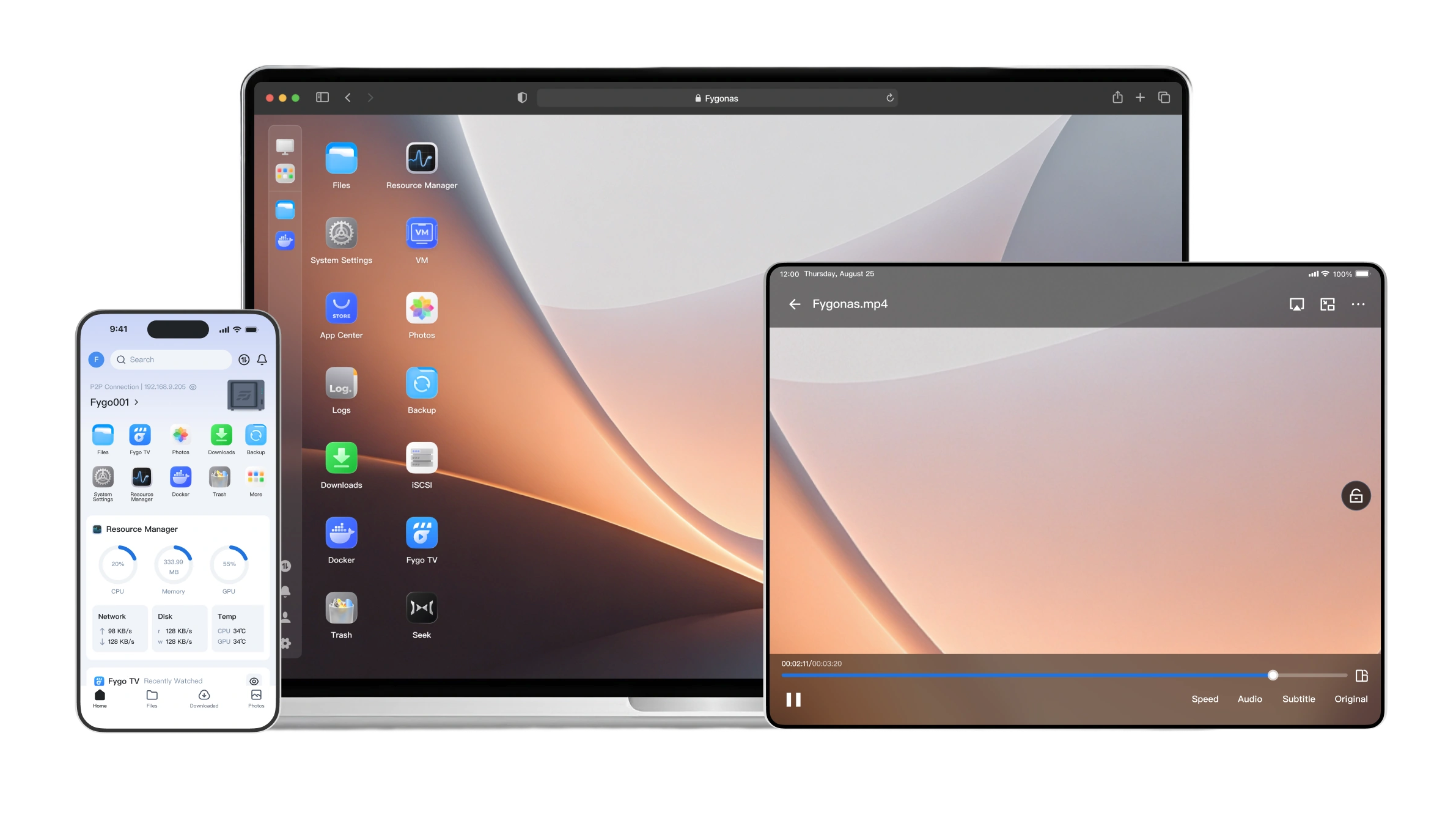
Fygo OS is a powerful yet effortless NAS operating system compatible with both x86 and ARM architectures. Through its clean and unified web dashboard, users can easily manage storage pools, RAID configurations, applications, services, and system settings from a single interface.

Fygo OS dashboard

The operating system is designed to make personal data more accessible, intelligent, and private.

AI-Powered Photo Management

Fygo OS includes an on-device AI photo gallery capable of:

  • Natural-language photo search
  • Face recognition
  • Location-based search
  • Intelligent photo categorization

All AI processing is performed locally, ensuring personal photos and metadata never need to leave the device.

Private Media Streaming with Fygo TV

Fygo TV transforms personal media collections into a premium streaming experience.

Movies and TV shows are automatically organized into elegant poster-wall libraries, while high-bitrate content can be streamed smoothly across a wide range of devices.

Cross-Device File Access with FygoSync

FygoSync enables users to securely access files from anywhere while providing flexible synchronization options across computers, smartphones, and tablets.

Advanced Features for Power Users

Fygo OS also provides advanced capabilities including:

  • Windows ACL support
  • Docker containers
  • Virtual machines
  • Multi-user management
  • Application ecosystem support

In addition to web-based management, native applications are available for:

  • iOS
  • Android
  • Windows
  • macOS
  • Smart TVs

This allows users to access and manage their data anytime and anywhere.

Building the Future of Private AI Infrastructure

The rise of local AI is transforming how users interact with their data. Instead of uploading personal information to cloud services, users increasingly want AI systems that run closer to where their data lives.

By combining Qualcomm-powered hardware, high-speed storage, and the intelligent capabilities of Fygo OS, DragonStation and DragonBay provide a foundation for the next generation of private AI infrastructure.

Whether building a personal AI assistant, managing a family media library, deploying a local knowledge base, or running AI services at the edge, users can now deploy a complete solution that integrates storage, AI computing, and private cloud functionality in a single system.

DragonStation and DragonBay will be available with Fygo OS pre-installed, enabling users to get started immediately without additional operating system installation or configuration.

For more information, visit fygonas.com.

Fogwise AIRbox Q900 Official Release: Edge Intelligence, Ready from Day One

· 5 min read

September 2025 — Radxa officially announces the launch of the Fogwise AIRbox Q900, a compact yet rugged industrial-grade Edge AI box powered by the Qualcomm® IQ-9075 processor. Combining powerful compute with reliability and ease of use, the Q900 represents a turning point: edge intelligence moving from concept to true plug-and-play deployment.

AIRbox Q900

The Era of Edge AI Has Arrived

Artificial intelligence has permeated nearly every aspect of our lives, but in most cases, compute power still resides in the cloud. This creates challenges around latency, cost, and privacy.

Imagine traffic lights relying on cloud-based recognition—by the time data is uploaded, processed, and returned, the moment for optimal traffic flow might already be gone. On the factory floor, delayed defect detection could mean missed opportunities to remove faulty products in real time.

The advantage of edge AI lies in on-site processing: real-time responsiveness, privacy by keeping data local, and reduced bandwidth usage. The Fogwise AIRbox Q900 was built precisely for this.

A Powerful Core

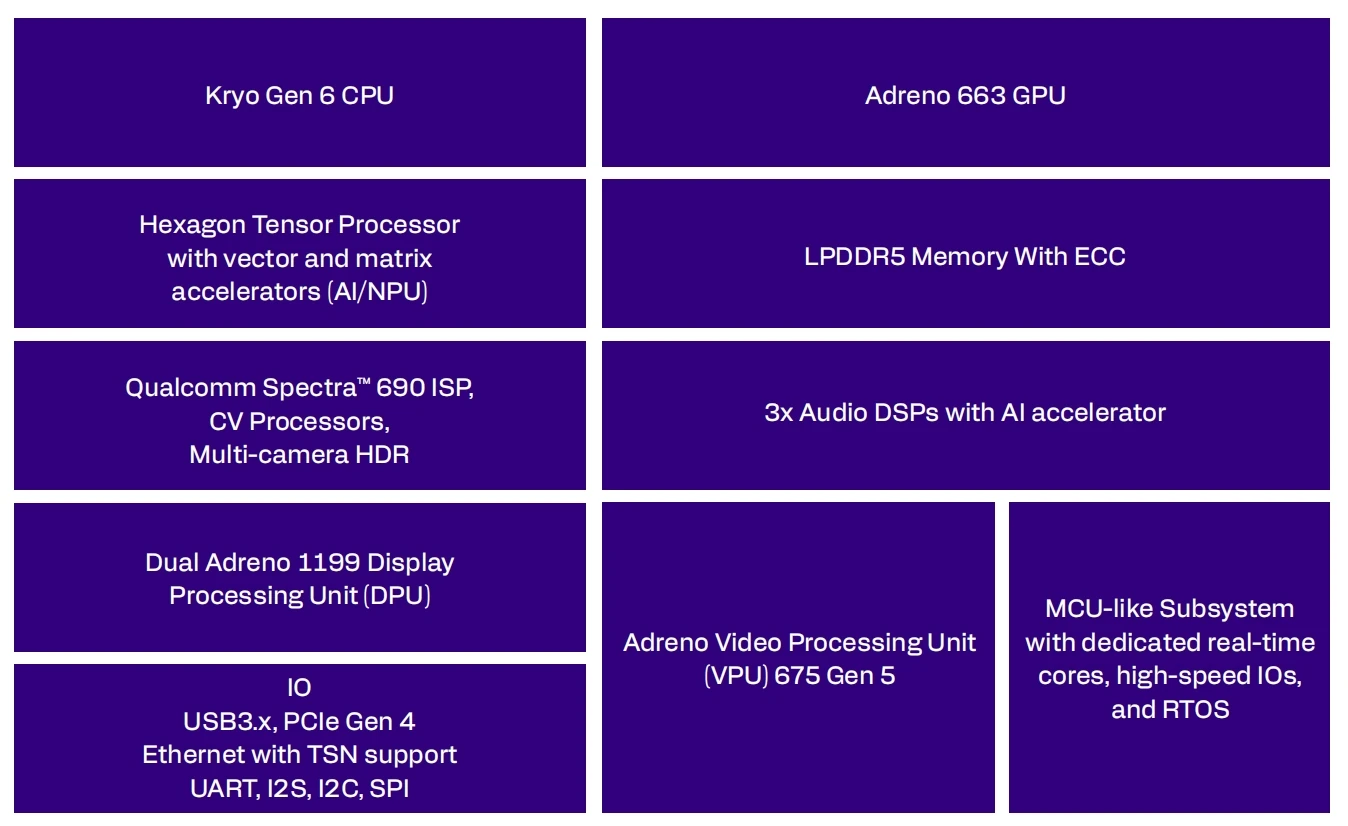
At its heart, the AIRbox Q900 features the Qualcomm® IQ-9075 processor.

IQ-9075 Block Diagram

  • CPU: Octa-core Kryo Gen6 CPU, full big-core Arm Cortex-A78C design, up to 2.36 GHz, delivering 230K DMIPS for compute-intensive workloads.
  • GPU: Integrated Adreno™ 663 GPU, peak performance up to 1.2 TFLOPS, with support for OpenGL, OpenCL, and Vulkan, accelerating both graphics rendering and parallel compute.
  • NPU: Dual Hexagon™ NPUs with up to 100 TOPS dense performance and up to 200 TOPS in sparse mode, enabling efficient inference across vision, speech, and multimodal tasks.

Notably, the Q900 can run 7B-parameter large language models locally, achieving inference speeds up to 22 tokens per second. What was once limited to datacenters can now run smoothly on a compact edge device.

Together, CPU, GPU, and NPU form a synergistic compute engine—making the AIRbox Q900 not just a compute box, but a micro-scale “brain” for intelligent edge inference.

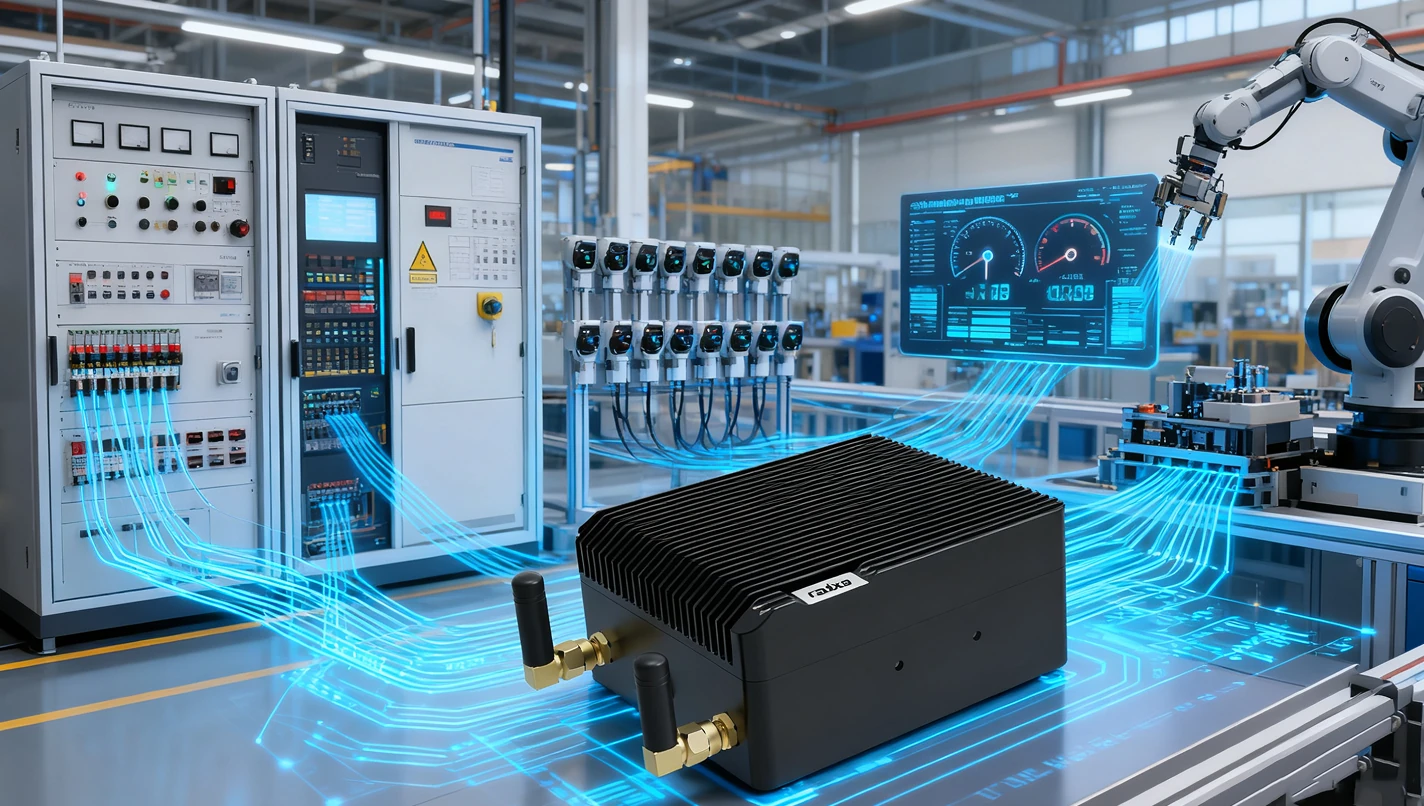
Built for Industrial Environments

True to Radxa’s industrial DNA, the AIRbox Q900 features:

  • Full metal housing for durability and heat dissipation
  • Wide temperature operation for reliability in harsh conditions
  • Active cooling design, with typical power consumption of just 20 W for long-term, quiet, low-maintenance operation

AIRbox Q900 at Induatrial Environment

For enterprises, this means a device that can run around the clock with confidence.

Flexible Connectivity and Expansion

The AIRbox Q900 is more than a standalone box—it’s a versatile edge platform:

  • Networking: 5G, Wi-Fi 6E, and Gigabit Ethernet with TSN (Time-Sensitive Networking) for deterministic, low-latency communication in automation and robotics.
  • I/O Interfaces: From USB to HDMI, from M.2 to industrial I/O, it supports a wide range of sensors, cameras, and external modules.

Whether serving as an IoT gateway or an edge server, the Q900 adapts with ease.

Plug-and-Play AI

For many developers, deploying AI often means complex environment setup. On the AIRbox Q900, this is radically simplified. It ships with an optimized system, ready to run mainstream AI frameworks and applications right out of the box. Developers can quickly integrate their own algorithms via SDKs and APIs.

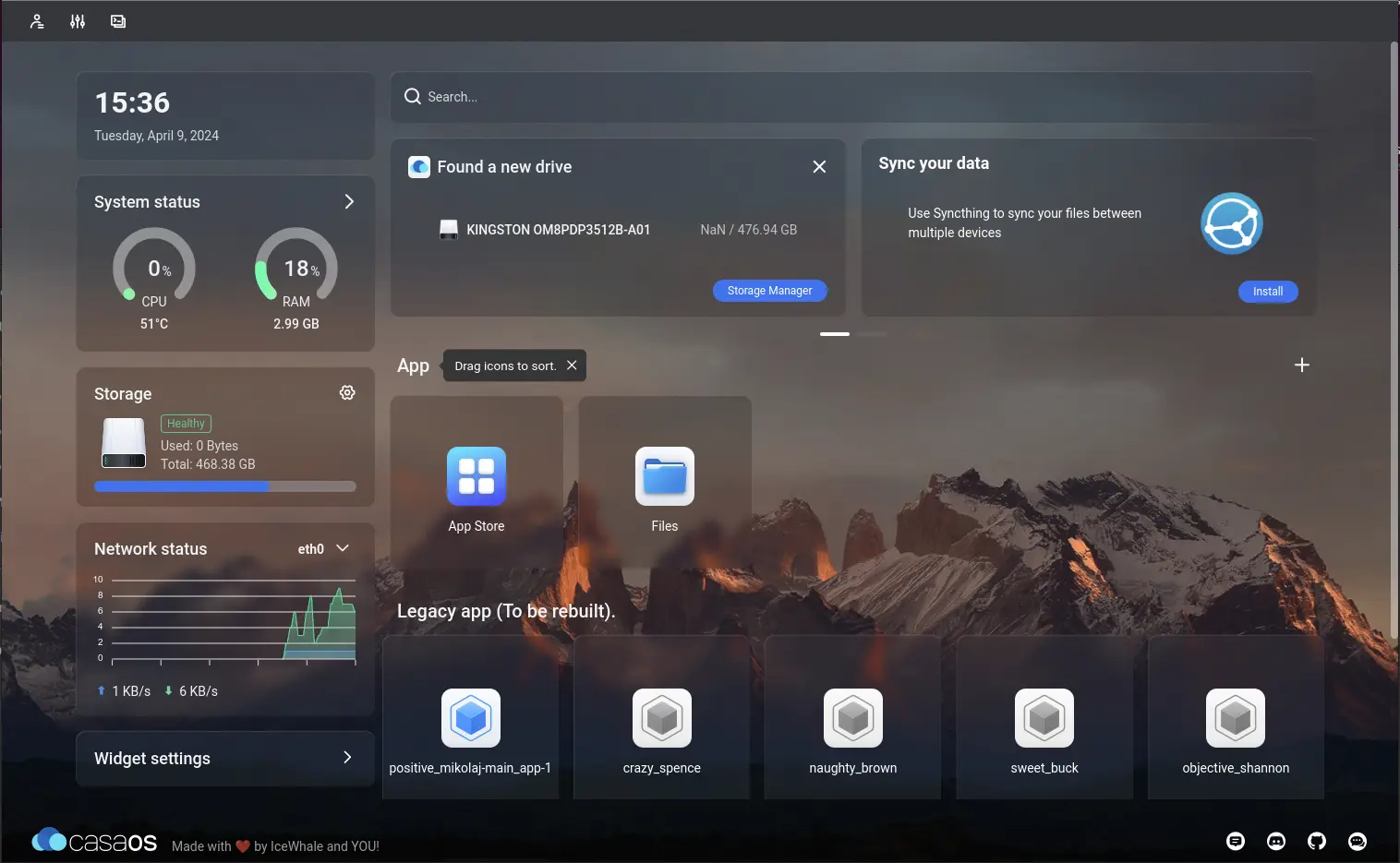
CasaOS Backend

Even better, the Q900 comes pre-loaded with CasaOS—a user-friendly app management platform. With its visual interface, even Linux newcomers can install and manage AI applications as easily as mobile apps. CasaOS includes an app store and container support, making AI deployment more accessible than ever.

A Complete AI Development Ecosystem

Hardware is just the foundation—true value comes from the ecosystem. The AIRbox Q900 provides:

  • QAirT SDK for efficient deployment of mainstream deep learning models
  • AIMET tools for quantization and pruning to optimize models for edge use
  • QAI App Builder to package models into deployable applications
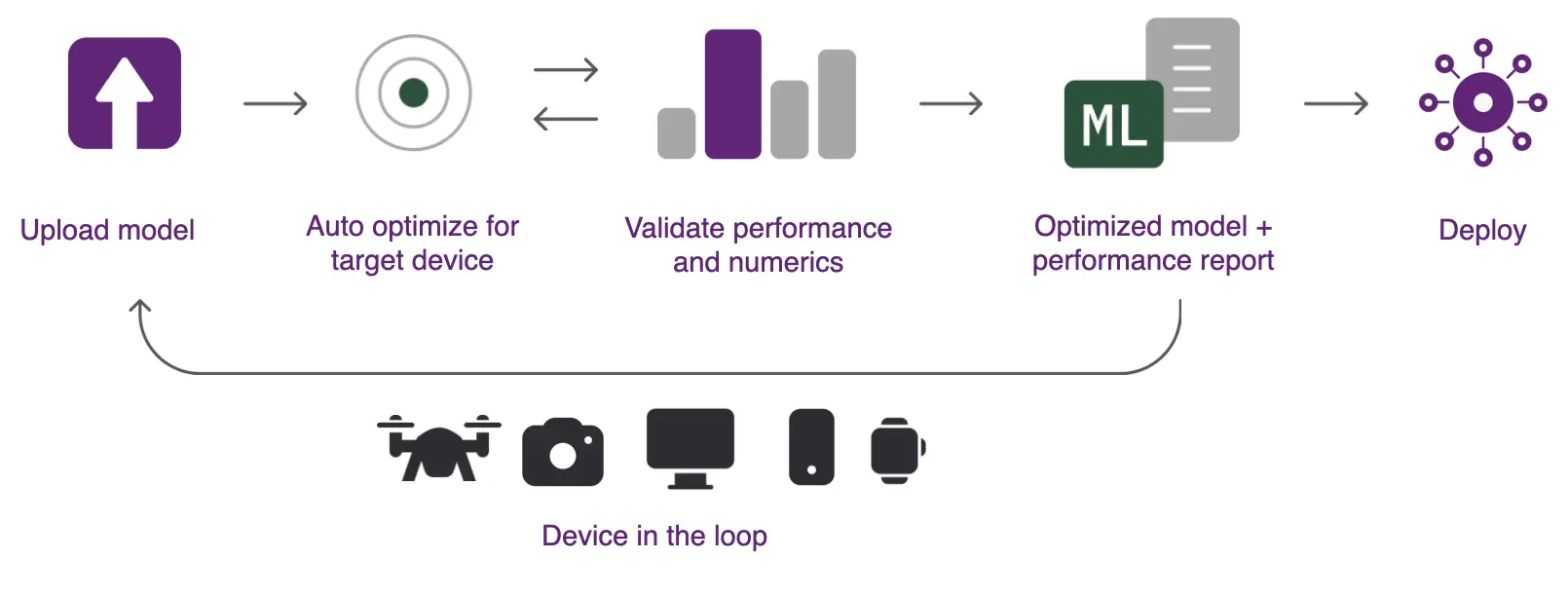
  • QAI Hub with a library of pretrained models covering vision, speech, and more

QAI Hub

From algorithm to application, developers gain a ready-made toolkit to accelerate research and deployment cycles.

Why AIRbox?

The name AIRbox reflects Radxa’s vision of edge AI, built on five core pillars:

  • AI Ready — plug in and run models out of the box
  • AI Recognition — process vision, speech, and sensor data instantly
  • AI Reasoning — move beyond execution to local decision-making
  • AI Realtime — achieve millisecond-level response without the cloud
  • AI Resilience — rugged, industrial-grade design for 24/7 operation

AIRbox Five R

These qualities define what sets AIRbox apart from other edge devices.

Endless Application Scenarios

The AIRbox Q900 fits into a wide range of industries and use cases:

  • Smart Cities: Real-time traffic video analysis for optimized flow
  • Industrial Manufacturing: On-site defect detection to reduce waste
  • Retail: Customer behavior analytics for smarter operations
  • Robotics & UAVs: On-board inference for autonomous platforms
  • Education & Research: Cost-effective platform for AI teaching and experimentation

Radxa’s Commitment

At Radxa, we believe in growing alongside developers. The launch of the Fogwise AIRbox Q900 marks a major milestone in our journey into Edge AI. With it, we aim to bring the benefits of edge intelligence into more industries and applications.

Looking ahead, Radxa will continue expanding the Fogwise product line, delivering flexible and powerful edge computing solutions for enterprises and developers worldwide.

Lear more about AIRbox Q900

AirBox Successfully Ports DeepSeek-R1 Models

· 2 min read

The Radxa Fogwise® AirBox has successfully ported the DeepSeek-R1-Distill-Qwen-7B/1.5B models.

Performance Details:

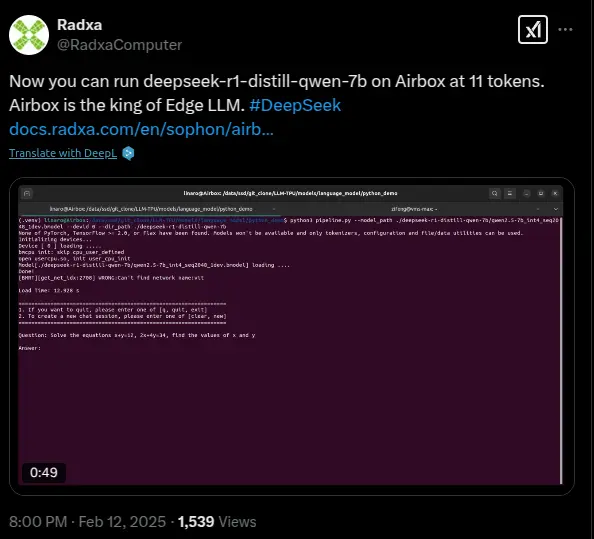
Deepseek-R1-Distill-Qwen-7B reaches 11 tokens/s

Deepseek-R1-Distill-Qwen-1.5B reaches 30 tokens/s

The Radxa development team has ported the DeepSeek-R1-Distill-Qwen-7B / 1.5B distilled models onto the Fogwise® AirBox. By using the TPU-MLIR toolchain for INT4 quantization and model compilation, We have successfully enabled the DeepSeek-R1 distilled model to run on the AirBox, which has 32 TOPS computational power.

AirBox and Deepseek

Performance Results

DeepSeek-R1-Distill-Qwen-7B reaches 11 tokens/s, it is really an Edge Computing Monster, click to watch the video

AirBox_deepseek_3.webp

ModelQuantizationSequence LengthFirst Token Latency (s)Tokens Per Second (tokens/s)
deepseek-r1-distill-qwen-1.5bINT481925.15930.448
deepseek-r1-distill-qwen-7bINT420482.84311.008

Model Deployment and Usage

The DeepSeek-R1-Distill-Qwen-7B/1.5B model porting method and detailed documentation have been released on Radxa official website. The models and code are fully open-source, and welcome everyone to try and deploy them.

Documentation Link

Fogwise® AirBox Overview

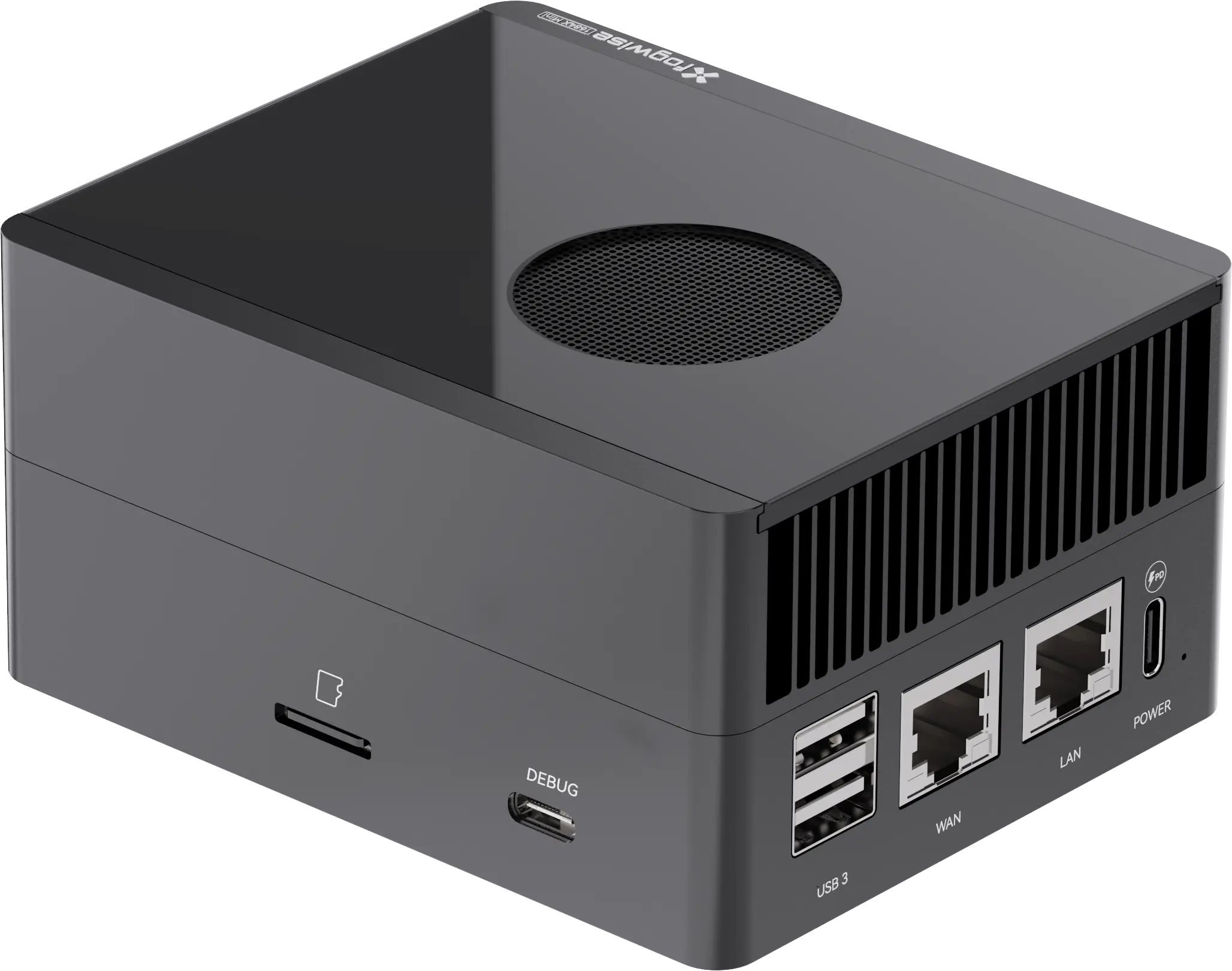
The Radxa Fogwise® AirBox is an embedded AI microserver with a computational power of up to 32TOPS. It supports various precisions (INT8, FP16/BF16, FP32) and local deployment of mainstream large models such as LLM, text-to-image generation, and various CV models. It features high performance, low power consumption, and strong environmental adaptability. With a variety of deep learning algorithms, it can achieve applications such as facial recognition, video structuring, behavior analysis, and status monitoring, empowering digital transformation in smart cities, smart transportation, smart energy, smart finance, smart telecom, and smart industries.

AirBox

Additionally, the Radxa Fogwise® AirBox is fully compatible with edge large models such as ChatGLM3, Llama3.1, Qwen2.5, Stable Diffusion3, FLUX.1, MiniCPM-V2.6, CLIP, Whisper, and more. For more details, please refer to the Radxa official documentation, and feel free to experience it.

click to see details

Ultralytics Officially Announces Support for RKNN

· 2 min read

Recently, Ultralytics officially announced its support for the RKNN platform. From now on, users of RK3588/356X series products can easily complete the model conversion and deployment of yolov11 by simply using the ultralytics library, pressing the "accelerate button" for the practical application of computer vision technology.

In this technological innovation, Radxa's star products, Radxa Rock 5B and Radxa Zero 3W, have stood out. As the core test platforms, they have provided a solid guarantee for the deployment and testing of the Ultralytics yolov11 model. Rock 5B is equipped with the high - performance Rockchip RK3588 processor, and Zero 3W is equipped with the powerful Rockchip RK3566 processor. With their excellent performance, stable performance, and strong compatibility, they have become the hardware cornerstone of technological breakthroughs.

YOLOv11 Inference on Board

RKNN Label on Board

For a long time, the complex processes of model conversion and deployment and hardware adaptation problems in the computer vision field have seriously restricted the promotion of technology. This official support of Ultralytics for the RKNN platform, combined with the successful tests based on Radxa products, has completely overcome this difficulty, making the implementation of technology more efficient.

RKNN Toolkit

The RKNN Toolkit, developed by Rockchip, was crucial in exporting the Ultralytics YOLO11 model to RKNN. This toolkit, a set of professional tools for deep - learning model deployment on Rockchip hardware, features the RKNN format. Optimized for Rockchip's NPU, RKNN unlocks full hardware acceleration on devices like RK3588 and RK3566, ensuring high - performance AI task execution.

Rockchip RKNN

The RKNN model offers many unique benefits. Its NPU - optimized design maximizes performance on Rockchip's NPU. Its low - latency trait suits real - time edge - device apps. Also, it can be customized for different Rockchip platforms, enhancing hardware resource use and overall efficiency.

For more details

For more details, see the Rockchip RKNN Export for Ultralytics YOLO11 Models and Radxa Docs.

Enhancing ROCK 5B+ with DEEPX DX-M1 AI Module

· 4 min read

All tests were conducted on the rock-5b-plus_bookworm_kde_b2.output.img.xz image.

The ROCK 5B+ is a precision single board computer (SBC) based on the RK3588 SoC with a 6 TOPS computing power NPU for a variety of AI applications. While 6 TOPS can handle a large number of AI vision tasks, application scenarios requiring higher computing power may require an upgrade. In this case, pairing the ROCK 5B+ with the DEEPX DX-M1 M.2 AI Accelerator Module adds a whopping 25 TOPS computing power, allowing the ROCK 5B+ to handle even more demanding AI workloads.

deepx_0

Fig.1 DX-M1 Product Overview

The DX-M1 module developed by DEEPX is connected to the ROCK 5B+ via the M.2 interface and the data communication is handled via the ROCK 5B+ PCIe. The module is optimized to accelerate inference tasks for models converted to dxnn format using the DXNN® - DEEPX NPU software (SDK).

deepx_1

Fig.2 DXNN SDK Architecture

DXNN® - DEEPX NPU software (SDK) includes a variety of tools: DX-COM (Model Conversion), DX-SIM (Model Simulation), DX-RT (Runtime), DX-NPU Driver (Device Driver) and DX-APP (Sample Code). With DXNN, deploying deep learning models on DEEPX AI hardware becomes efficient and easy, and leverages its high performance.

Hardware Installation

Insert the DX-M1 module into the M.2 slot of the ROCK 5B+ and power on. The ROCK 5B+ has two M.2 slots on the bottom, so even with the DX-M1 installed, another SSD can be installed if desired.

deepx_8

Fig.3 DX-M1 Installation Diagram

After booting the system, confirm PCIe device recognition.

deepx_3

Fig.4 ROCK 5B+ PCIe Detection Result

After installing the DX-NPU driver, the DX-M1 module should be correctly recognized on the ROCK 5B+.

deepx_4

Fig.5 DX-M1 Status Check

YOLOv5s DXNN Performance Evaluation

The DX-RT component facilitates inference for dxnn models. To evaluate YOLOv5s model performance on the DX-M1, we use the run_model benchmark tool.

Inference latency on ROCK 5B+ via the DX-M1 includes three stages: Latency = PCIe I/F (Write Time) + NPU (Inference Time) + PCIe I/F (Read Time).

deepx_5

Fig.6 DX-M1 Latency Analysis

# run benchmark
run_model -m YOLOV5S_3.dxnn -b -l 1000

deepx_6

Fig.7 YOLOv5s DXNN Benchmark Results

The average inference time is 4628.91 μs, i.e., 216 FPS, after 1000 inductions on the single-core NPU of the DX-M1. With three NPU cores, the theoretical maximum speed of the DX-M1 is 648 FPS, which is very close to the benchmark result of 645.476 FPS.

YOLOv5s 30 Channels Video Stream Detection

The DX-APP software package includes several computer vision demos that can be quickly deployed on the DX-M1 for tasks such as object detection and segmentation. In this example, Radxa performs object detection on 30 video streams simultaneously using the ROCK 5B+ and the DX-M1. The ROCK 5B+ decodes multiple video streams, sends the data to the DX-M1 for inference, and finally processes the output. It is worth to note that DX-APP recommends to use opencv 4.5.5, but since the FFmpeg version of the ROCK5B+ system is not compatible with Opencv 4.5.5, we compile the newest 4.10.0 version here.

# run multi-stream object detection
./bin/run_detector -c example/yolov5s3_example.json

Single-core NPU 30-channel video inference FPS: 240 FPS.

deepx_7

Fig.8 ROCK 5B+ Single-Core NPU 30-Channel Detection Output

Conclusion

Pairing the ROCK 5B+ with the DEEPX DX-M1 AI module is a significant enhancement for users requiring high-performance AI capabilities on a single-board computer. The addition of 25 TOPS of computing power opens new possibilities, allowing the ROCK 5B+ to efficiently handle demanding tasks, such as multi-stream object detection and high-speed inference. This combination showcases the potential of the ROCK 5B+ as a robust platform for AI workloads in edge computing, offering both flexibility and power. With tools like DXNN SDK and hardware support for intensive applications, the ROCK 5B+ and DX-M1 provide a valuable solution for developers and industries focused on AI and computer vision.

Radxa Fogwise AirBox is now available for pre-order!

· 11 min read

The era of local generative AI has arrived — AirBox now open for pre-orders! Experience Llama3 online today!

Radxa Computer has launched the world's first SG2300X Mini AI Box, now available for pre-order on Arace.tech for just $321!

Major players vie for edge generative AI.

In 2024, running generative AI at the edge has become almost standard for the next generation of chips from companies like Intel, AMD, and Qualcomm.

The Rabbit R1, which gained traction at CES, promises natural language control of many smartphone apps using ChatGPT. While it sparked excitement among media, users who actually tested the product found single-task response times exceeding 20 seconds, leading to a poor user experience.

In situations where network access is poor, how can we achieve real-time, low-latency responses? The answer lies in placing generative AI services at the edge, rather than constantly transferring between the cloud, data centers, and edge nodes. Built on the SG2300x platform, the edge generative AI box Airbox boasts speeds of up to 12 tokens/s and StableDiffusion renders in just 1 second, bringing generative AI within reach.
AirBox-overview

Powered by SG2300X

SpecificationsSG2300X
ProcessorArm A53 8-core 2.3GHz
MemoryLPDDR4x 4.266 Gbps 128bit 68.256 GB/s; Max capacity supports 16GB
AI Performance24 TOPS INT8; 12 TFLOPS FP16/BF16; 2 TFLOPS FP32; Supports mixed precision computation
Video DecodingH.264 & H.265: 32 channels 1080P @25fps; Max resolution supports 7680 * 4320
Video EncodingH.264 & H.265: 12 channels 1080P @25fps; Max resolution supports 7680 * 4320
Image Decoding/EncodingJPEG: Decode 750 frames/sec @1080P; Encode 250 frames/sec @1080P; Max resolution supports 32768 * 32768
Video Post-processingSupports image CSC (RGB/YUV/HSV), resize (1/128~128), crop; Supports padding, border, font, contrast, and brightness adjustment; Max resolution supports 8192 * 8192; Images with resolutions exceeding this can be processed and stitched after cutting
High-speed InterfacesPCIe Gen3 X16 EP, configurable as X8 RC + X8 EP, supports cascading; 2 Ethernet RGMII interfaces, supports rates of 10/100/1000Mbps; 1 SD/SDIO controller; 1 eMMC 5.1, bus width 4-bit
Low-speed Interfaces1 SPI Flash interface; 3 UART interfaces, 3 I2C interfaces; 2 PWM interfaces, 2 fan speed detection interfaces; 32 general IO
SecuritySupports AES/DES/SM4/SHA/RSA/ECC acceleration; Supports true random number generation; Supports secure key storage mechanism, secure boot, Trustzone
Typical Power Consumption20W
Operating Temperature-40°C ~ +105°C
ToolchainSupports TensorFlow/Pytorch/Paddle/Caffe/MxNet/DarkNet/ONNX; Supports TensorFlow/Pytorch/Paddle/TensorRT as well as customer-customized INT8, FP16, BF16 quantization algorithms

The SG2300X processor, with its 24 TOPS of computational power, can smoothly run generative AI models like LLAMA-2 7B.
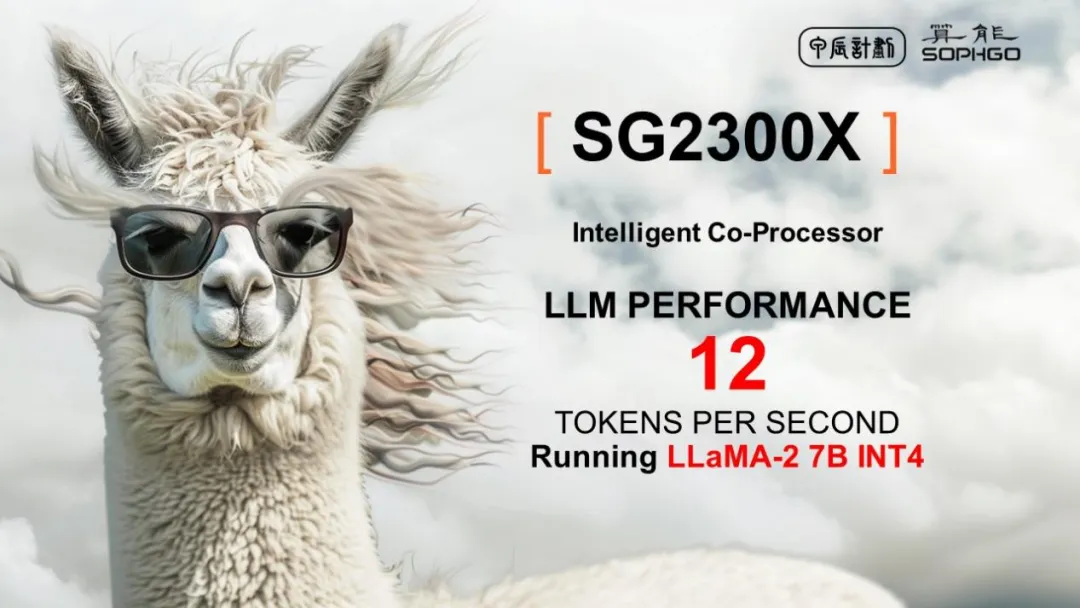
LLMP

The remarkable computational power of SG2300X enables it to process more data in shorter time frames, resulting in faster response times and delivering users a smoother and more intelligent experience.
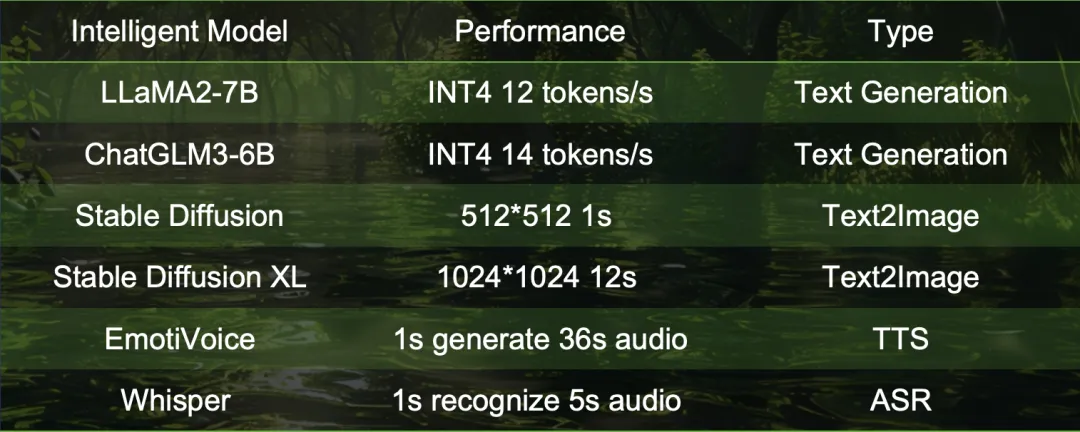
LLMBenchmark

Radxa Fogwise AirBox

AirBox-mark

The Radxa Fogwise AirBox, developed by the Radxa team, is an edge AI box powered by SG2300X. It boasts a high computational power of up to 24 TOPS@INT8 and supports multiple precisions (INT8, FP16/BF16, FP32). It supports the deployment of mainstream AI models such as private GPT and text-to-image, and comes equipped with an aluminum alloy casing, allowing deployment in harsh environments.

SpecificationsRadxa Fogwise AirBox
Form Factor104mm x 84mm x 52mm
ProcessorSOPHON SG2300X SoC, Eight-core Arm® Cortex®-A53 (Armv8) @ 2.3GHz
TPUTensor Processing Unit, Computational Capability: Up to 24TOPS (INT8), 12TFLOPS (FP16/BF16), and 2TFLOPS (FP32)
Supports leading deep learning frameworks including TensorFlow, Caffe, PyTorch, Paddle, ONNX, MXNet, Tengine, and DarkNet
Memory16GB LPDDR4X
StorageIndustrial-grade 64GB eMMC
16MB SPI Flash
Offers SD card slot for high-speed SD card
MultimediaSupports decoding 32 channels of H.265/H.264 1080p@25fps video
Fully handles 32 channels of Full HD 1080P@25fps video, involving decoding and AI analysis
Supports encoding 12 channels of H.265/H.264 1080p@25fps video
JPEG: 1080P@600fps, supports up to 32768 x 32768
Supports video post-processing, including image CSC, resizing, cropping, padding, border, font, contrast, and brightness adjustment
Connectivity2x Gigabit Ethernet ports (RJ45)
1x M.2 M Key (2230/2242) for NVMe SSD
1x M.2 E Key for WI-FI/BT
Operating Temperature0°C to 45°C
CasingCorrosion-resistant aluminum alloy casing
Heat DissipationPWM-controlled fan with custom heatsink

AirBox Run Local Generative AI

With high computational power and large memory, AirBox Run Local Generative AI Running the Llama-7B model on SG2300x, with weight quantization to INT4 and computation utilizing FP16, achieves up to 80% utilization during the first token calculation. Subsequent inferences benefit from kvcache, reducing computational demands while data transfer time completely covers computation time, shifting the bottleneck from computation to bandwidth.

Models like StableDiffusion continuously demand intensive computational power. Therefore, efficient execution of both LLM and Stable Diffusion models necessitates both high computational power and large memory. The main controller SG2300x in Airbox boasts 24TOPS of INT8, 12TFLOPS of FP16, 16G of memory, and 128-bit bandwidth, perfectly suited for the task.

Local execution with response times controlled within 1 second greatly enhances user experience. For instance, the latency of the qwen-7b model running on Airbox is 0.6s, with subsequent inference speeds reaching 12 tokens/s, meeting the real-time requirements of scenarios like natural language querying and voice interaction.

Airbox also functions as a complete Ubuntu Linux server, supporting CASAOS independently. As long as devices are connected, they can share its computational power. Antique PCs, tablets, smartphones, NAS, speakers, story machines, TVs, and other devices can all harness generative AI capabilities, turning "one device, multiple uses" into reality.

$321! Unbeatable value

How does the efficiency of running generative AI locally on AirBox compare to mainstream edge computing products?

Taking various models from the Nvidia Jetson series that support generative AI as an example, the Jetson AGX Orin 32GB version is priced at $1097 on Amazon.com, while the 64GB version costs $2137.
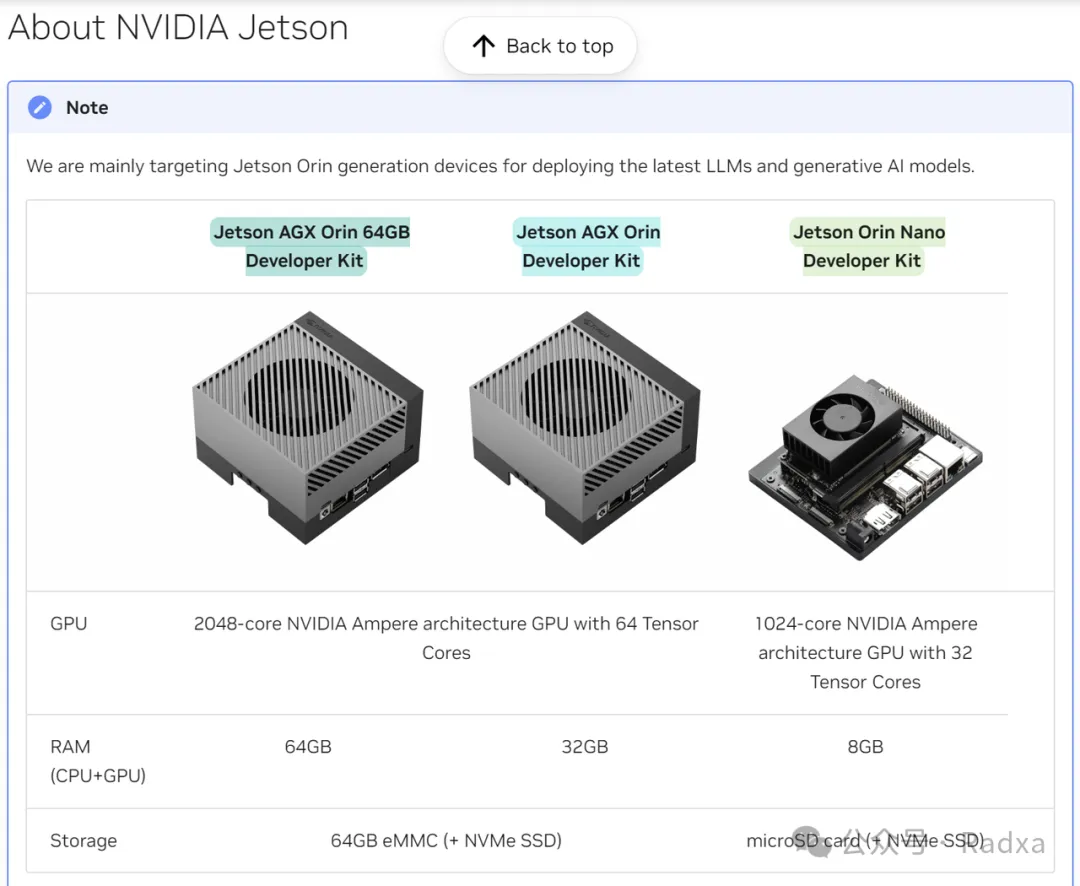
Jetson

With MLC acceleration, AGX Orin achieves 47 tokens/s for Llama-7B and 25 tokens/s for Llama-2-13B. On Airbox, the performance for Llama2-7B is 12 tokens/s, while Llama2-13B achieves 6 tokens/s. Airbox supports int4, int8, and fp16 precisions, with similar performance for Llama2 and its various variants. A single core can handle models up to 20B-int4.

LLMbenchmark-01

(Note: Data for Orin is sourced from the official NVIDIA website; higher values are better in this context.)

Based on testing, it's found that AirBox offers a significant advantage in terms of tokens per second per unit of currency (product price) compared to AGX Orin.

For Llama-7B:

  • AGX Orin (64GB) ≈ 0.02199 tokens per second/USD
  • AirBox ≈ 0.03738 per second/USD

For Llama-13B:

  • AGX Orin (64GB) ≈ 0.01169 per second/USD
  • AirBox ≈ 0.01869 per second/USD

On AGX Orin, Stable Diffusion takes 2.2 seconds per image, while SDXL takes 23.1 seconds. After utilizing LCM acceleration on Airbox, SD1.5 takes 1.1 seconds, and SDXL takes 7.4 seconds.

SDbenchmark-01

(Note: Data for Orin is sourced from the official NVIDIA website; Orin's step count is not specified, assuming 20 steps; lower values are better in this context.)

The rich ecosystem of applications

The Radxa Fogwise AirBox provides outstanding artificial intelligence performance, meeting your demands for powerful computing capabilities. This compact yet powerful device seamlessly integrates with leading deep learning frameworks like TensorFlow, PyTorch, and Caffe, offering users a portable and efficient AI experience. Whether you're a manufacturer, AI enthusiast, hobbyist, or professional, the Fogwise AirBox is your best choice.

Support for LLama 3

Support for LLama 3: Meta's latest open-source generative AI

Meta indicates that LLama 3 has demonstrated outstanding performance in multiple key benchmark tests, surpassing industry-leading models of the same kind. Whether it's code generation, complex reasoning, following instructions, or visualizing ideas, LLama 3 has achieved comprehensive leadership. The model excels in the following five benchmark tests:

  • MMLU (Subject Knowledge Understanding)
  • GPQA (General Problem Question Answering)
  • HumanEval (Code Ability)
  • GSM-8K (Mathematical Ability)
  • MATH (High-difficulty Mathematical Problems)

Faced with the exciting performance of LLama 3, the Airbox team responded actively, quickly porting LLama 3 8B and successfully running it on Airbox. The video showcases LLama 3 8B running on Airbox.

(Note: LLama 3 8B's knowledge is updated until March 2023)

As you can see, LLama 3 8B runs extremely smoothly on Airbox, achieving a processing speed of 9.6 tokens/s, fully demonstrating its practical value.

The AirBox team has taken the lead in launching an online experience based on LLama 3 8B on AirBox. We welcome everyone to personally experience the outstanding performance of LLama 3 and the powerful computing power provided by AirBox.

(Note: The service is based on a single AirBox deployment. If there is a high volume of concurrent users, there may be queues. For a deeper experience, we recommend trying during off-peak hours.)

Support CASA OS

A lightweight and feature-rich open-source dashboard system
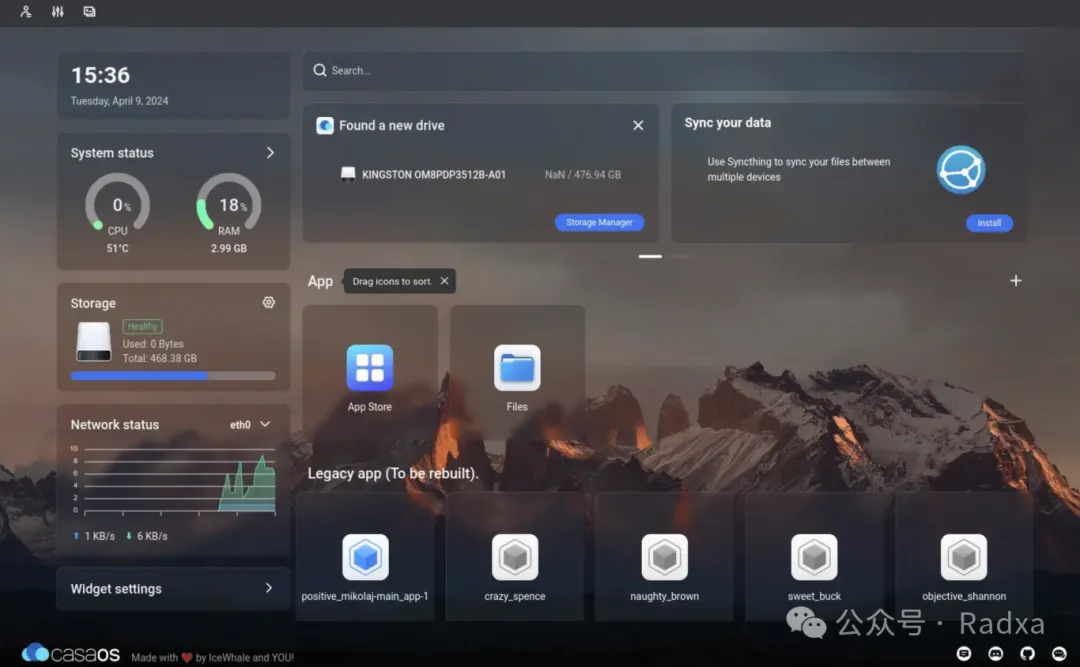
casaos

Install generative AI apps with just one click

Currently supported popular models include Stable Diffusion, Whisper, ImageSearch, ChatDoc, and more. Install them with just one click, eliminating the need for tedious environment configuration.
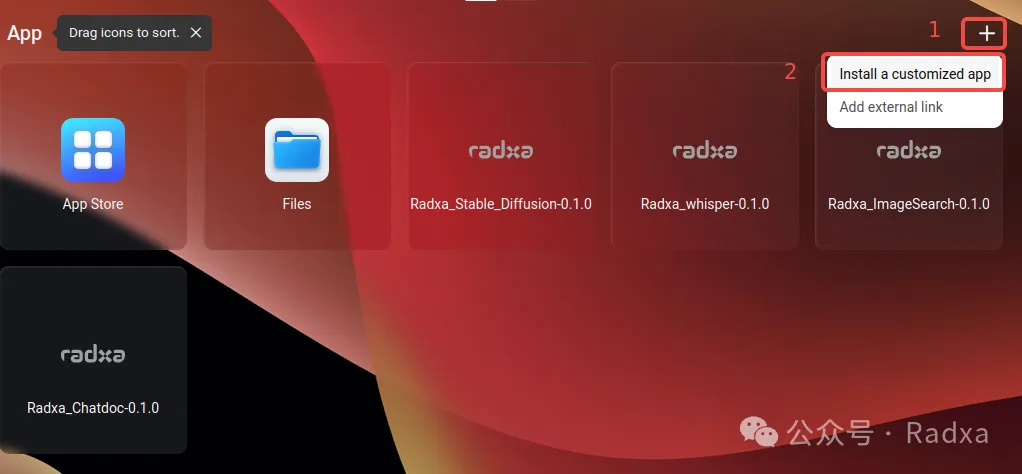
casaos-install

Text to Image, Image to Image

The AirBox team has conducted deep optimizations and adaptations for StableDiffusion, enabling lightning-fast image generation. We support online model replacement for added flexibility.

Stablediffuision

Support ChatDoc

ChatDoc: Let AI Understand Your Documents

Empower AirBox to be your personal data steward.
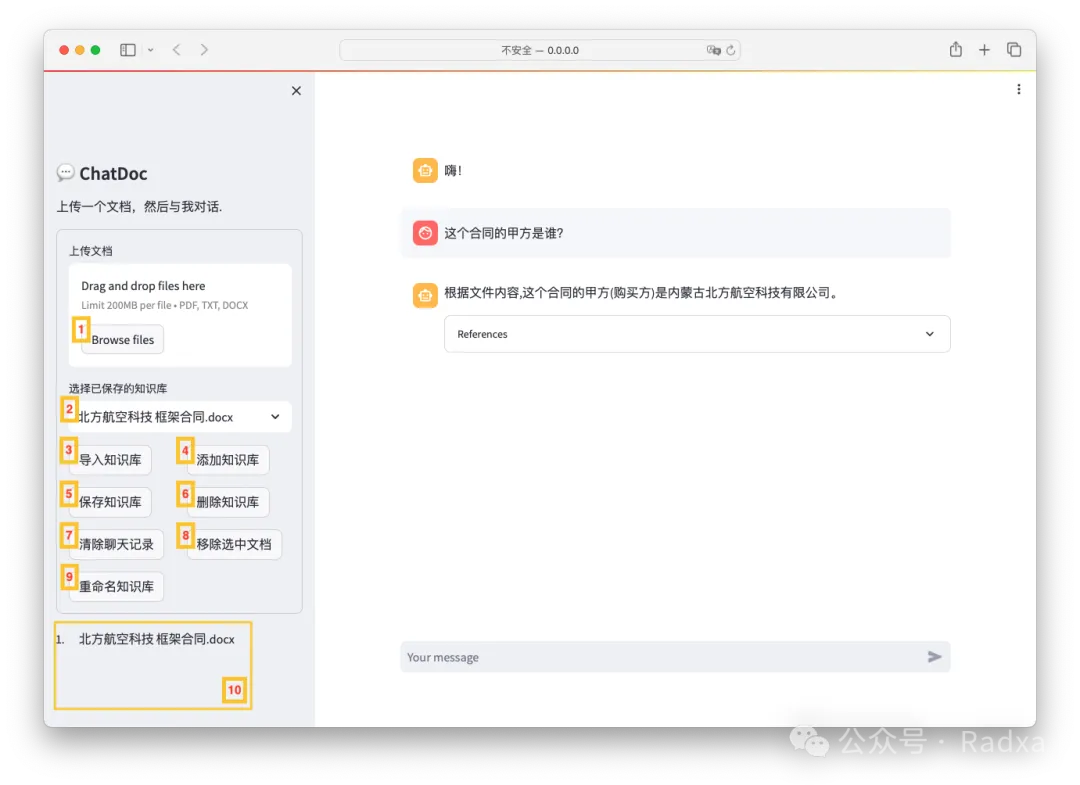
chatdoc

Support Whisper

Whisper: Real-Time Text Transcription in Over a Hundred Languages Whisper, an efficient speech recognition model, seamlessly converts speech into text in real-time, supporting nearly a hundred languages. This greatly enhances the convenience and accuracy of information retrieval. Whether it's recording meetings, real-time multilingual translation, or providing live captions for the hearing-impaired, Whisper offers robust support. Multiple sectors including education, healthcare, and law stand to benefit from its precise and rapid speech transcription services.
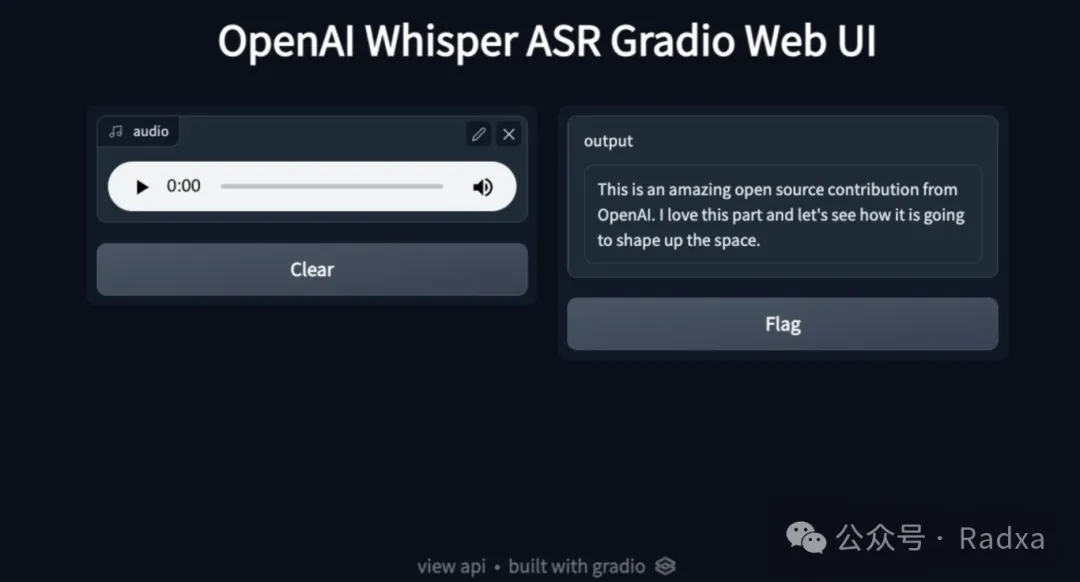
whisper

In the future, leveraging generative AI models like LLaMa, Stable Diffusion, Whisper, and others will give rise to a plethora of cross-modal applications, ushering in unprecedented AI capabilities spanning across speech, image, and text domains. Imagine this scenario: an all-encompassing personal assistant AI equipped with Whisper and TTS models for authentic multilingual capabilities, providing real-time translation and transcription for conversations in any language worldwide. Additionally, leveraging Stable Diffusion to create visual content to aid communication, this would revolutionize the way international conferences, remote education, and global collaborations are conducted, accelerating the advent of the digital world!

AirBox Model Zoo

One-click Deployment of Popular Models

Comes with a rich collection of AI application examples, ready to use out of the box.

For more details, please visit
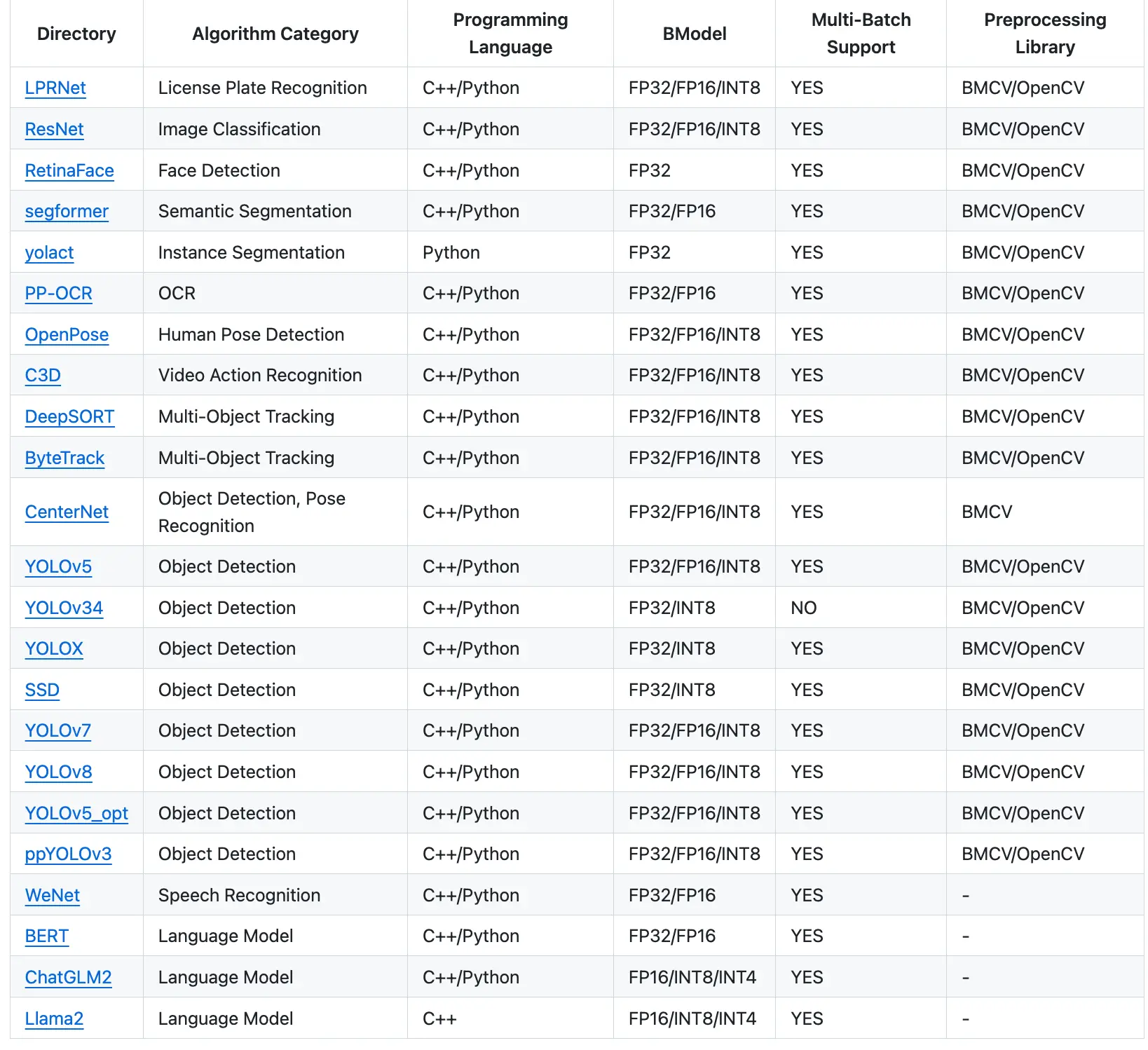
model-zoo

Graphical Model Conversion Tool

Easily Deploy Models to AirBox via Graphical Interface

To ensure a seamless user experience, AirBox has developed a feature for one-click conversion of Civitai and Huggingface models. With just a few clicks on the GUI interface, deploying the Stable Diffusion model on AirBox is now effortless.
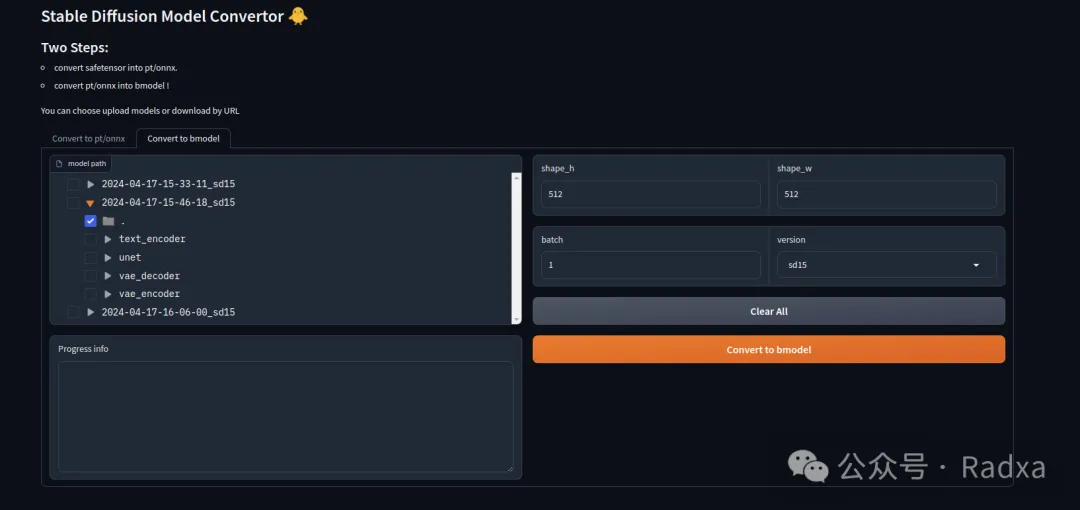
TPU-tool TPU-tool

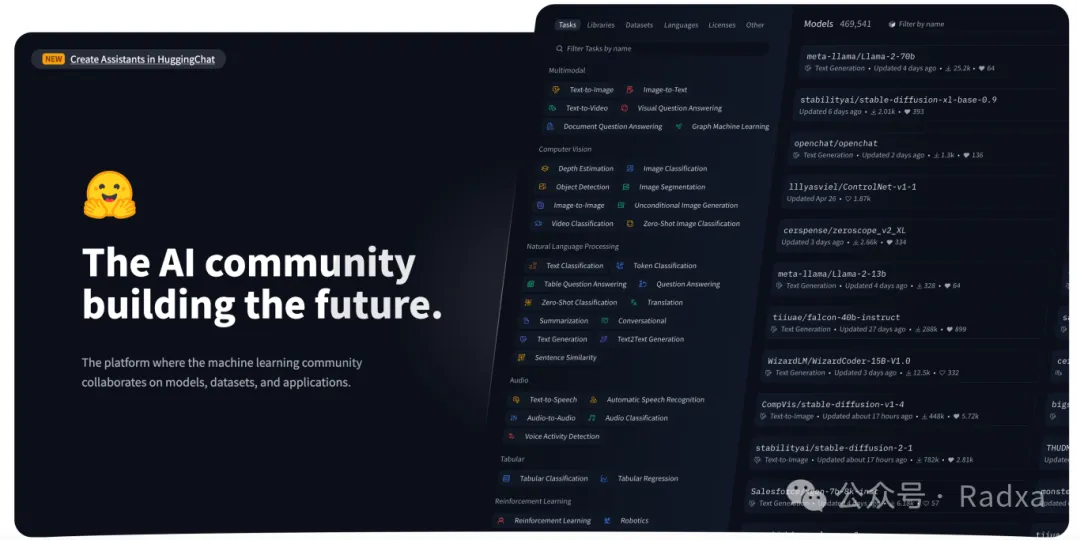
With the model conversion tool, you can effortlessly deploy open-source generative AI models from HuggingFace and Civitai to AirBox, embracing the latest AI technologies. huggingface
AICore SG2300X

Empowering Enterprises to Easily Attain High-Performance AI Product Capabilities

The Radxa AICore SG2300X is a computing module equipped with the advanced SOPHON AI processor SG2300X, delivering powerful performance to unleash your full potential. With 16GB of memory and 64GB of eMMC storage, the Radxa AICore SG2300X boasts an impressive 24 TOPS INT8 computational capability, excelling in various tasks and fully supporting mainstream deep learning frameworks. Integrated with core circuits and components, it significantly accelerates product development speed, making it the preferred choice for enterprises to rapidly develop high-performance AI products.
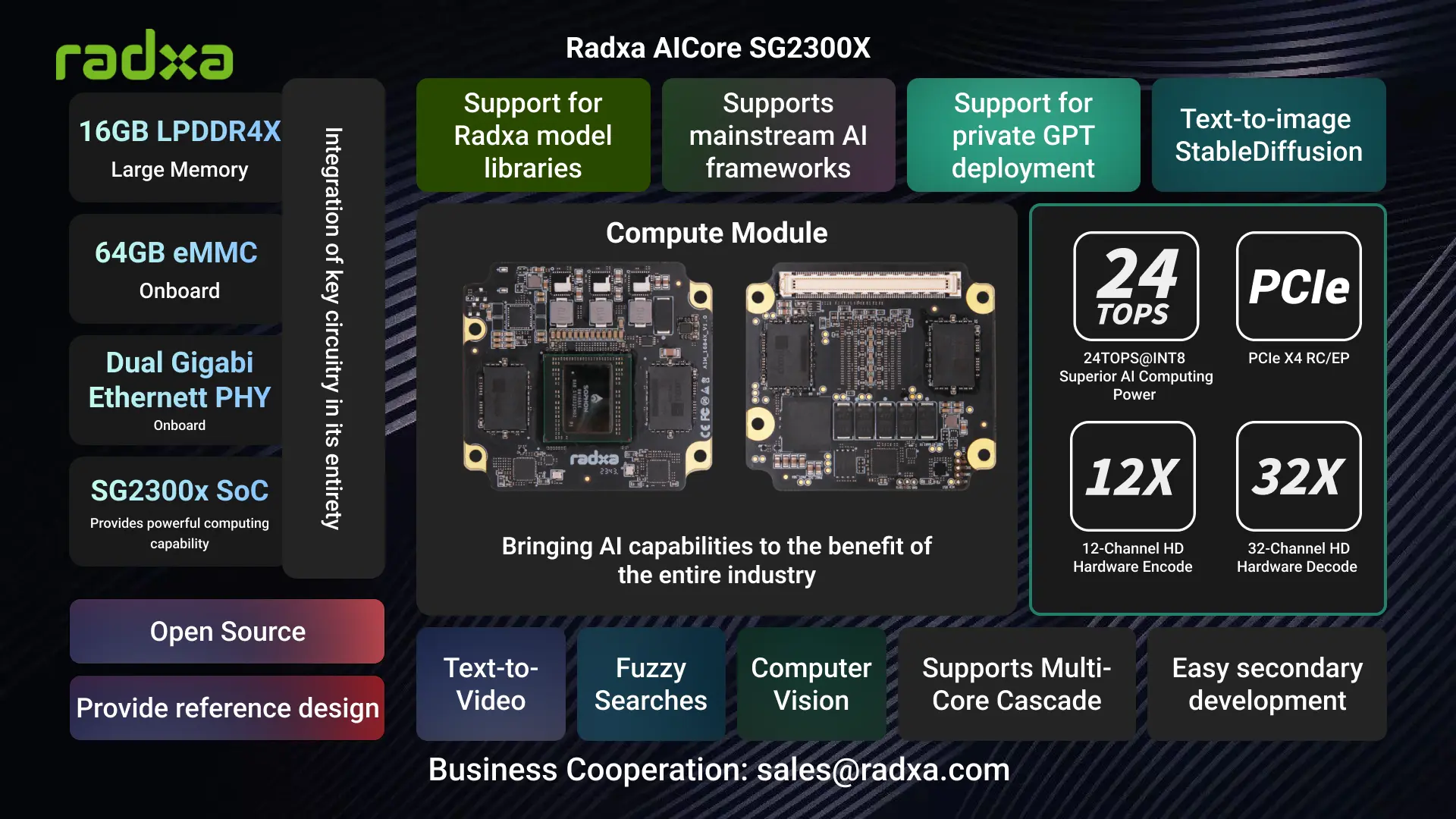
AICore-sg2300x

Radxa provides ODM/OEM services for industry partners, leveraging the rich engineering experience on the SG2300X platform to maximize the acceleration of productization in various industries.

Radxa Fogwise AirBox now available for Pre-order

You can now pre-order the AirBox at arace.tech.

Pre-order before May 20 and get gift for free

  • 20V/3A Power adapter
  • USB MIC
  • Intel WIFI6 Wireless Module
Radxa NIO 12L Launch

· 4 min read

Radxa, Canonical, and MediaTek Debut the NIO 12L at Embedded World: A Next-Generation Single Board Computer Powered by APU-Enabled MediaTek Genio 1200

Radxa NIO 12L

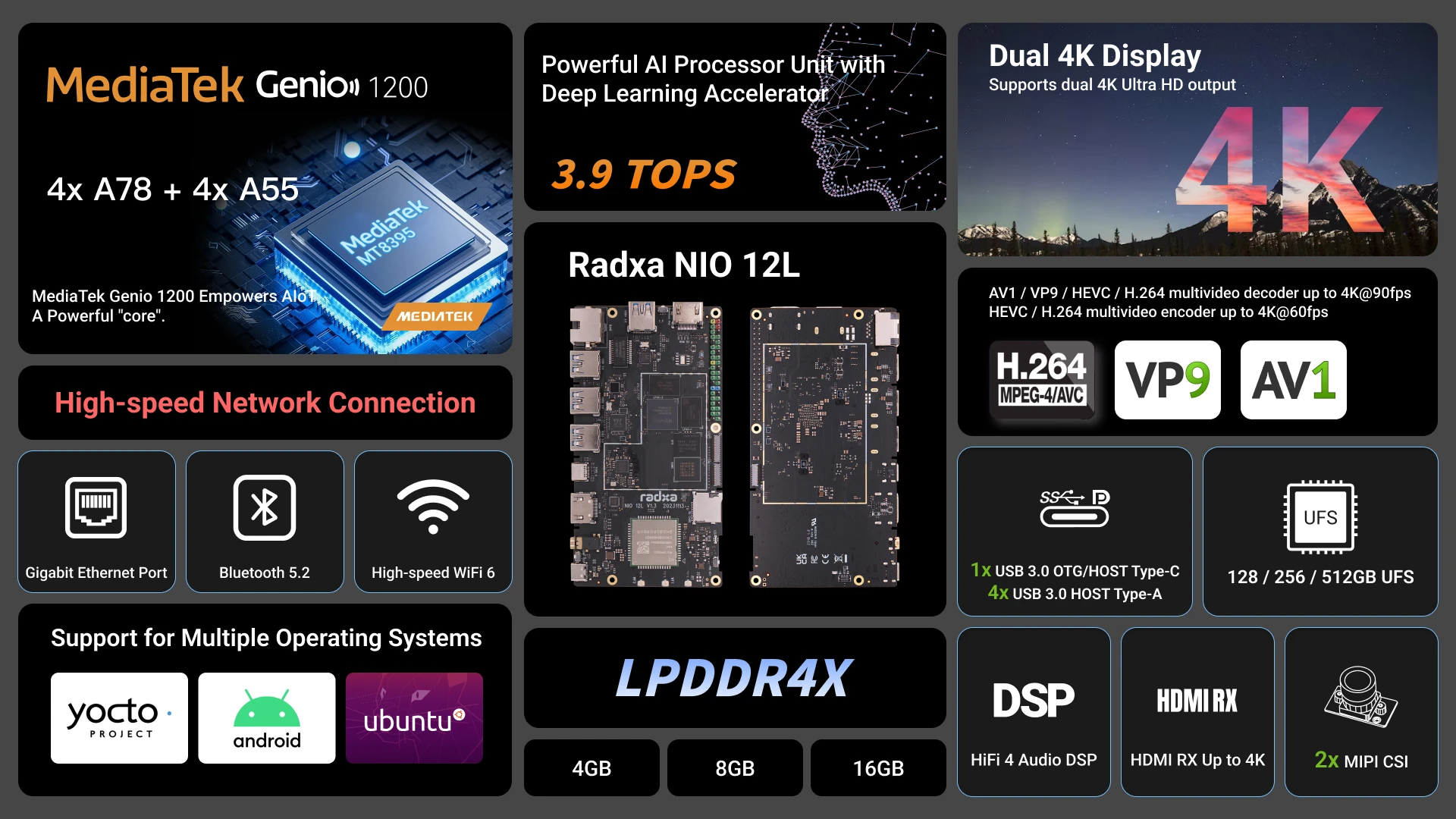
Munich, Germany – [11th, April, 2024] – During the acclaimed Embedded World exhibition, Radxa, in alliance with Canonical and MediaTek, is thrilled to unveil the NIO 12L, a cutting-edge single board computer (SBC) engineered to inspire and empower developers, engineers, and makers across the globe. The NIO 12L, harnessing the power of the MediaTek Genio 1200 SoC with its advanced AI Processing Unit (APU), is set to make waves in high-performance computing, AI applications, and beyond.

AI at Your Fingertips with MediaTek Genio 1200 APU

The MediaTek Genio 1200’s APU feature stands out as a game-changer for AI computing on an SBC platform. Its dedicated APU facilitates AI-driven tasks, such as machine learning, computer vision, and predictive analytics, with remarkable efficiency and speed. The Genio 1200’s APU allows the NIO 12L to handle complex AI workloads natively, offering an ideal solution for edge computing scenarios where rapid, real-time processing is crucial.

Dive into the NIO 12L Experience at Embedded World

Embedded World attendees can immerse themselves in the world of the NIO 12L at the following:

  • MediaTek booth [ 3A - 538 ]
  • Ubuntu booth [ 4 - 354]
  • Radxa / Okdo booth [ 3A - 415 ]

Above booths will showcase the NIO 12L’s capabilities, including its AI prowess, through live demonstrations and interactive experiences.

Unmatched Performance and Versatility

The NIO 12L redefines the standards for SBCs, offering outstanding performance with its octa-core architecture and top-tier GPU. It is perfectly suited for an extensive range of applications, from high-end gaming to professional-grade IoT solutions. The flexible RAM and storage configurations, along with a full suite of modern connectivity options, ensure that the NIO 12L is a versatile platform ready to tackle any challenge.

Empowering Developers with Optimised Ubuntu on MediaTek Genio

’In collaboration with Canonical, the NIO 12L will ship with Ubuntu 22.04 LTS pre-installed, providing a secure, long-term supported environment for software development and deployment. The out-of-box solution offered by Canonical and MediaTek provides enterprise-grade security and meets the growing high performance computing demands of the IoT industry, leading to an As a result, developers will benefit from a familiar and easy-to-use software development flow and a faster time to the market. NIO 12L is now undergoing the Ubuntu Certification process with an extensive set of over 500 OS compatibility focused hardware tests and will be listed on Canonical’s certified hardware list when it’s ready.

Ready for the Global Market with Community Focus

Radxa, Canonical, and MediaTek are committed to making the NIO 12L available worldwide, with purchasing options through a well-established network of distributors and online retail channels. The partners are equally dedicated to building a robust community around the NIO 12L, offering comprehensive support, educational resources, and a platform for users to engage, share, and collaborate.

Be a part of the AI revolution with the NIO 12L at Embedded World and join a global community of innovators.

About Radxa

Radxa is a leading developer and manufacturer of single board computers known for their performance, reliability, and accessibility. Our mission is to empower creators worldwide to turn their ideas into reality with our innovative and versatile platforms.

About Canonical

Canonical, the publisher of Ubuntu, provides open source security, support and services. Our portfolio covers critical systems, from the smallest devices to the largest clouds, from the kernel to containers, from databases to AI. With customers that include top tech brands, emerging startups, governments and home users, Canonical delivers trusted open source for everyone.

Learn more at Canonical

About MediaTek

MediaTek Incorporated is a global fabless semiconductor company that enables 1.5 billion connected devices a year. We are a market leader in developing innovative systems-on-chip (SoC) for mobile devices, home entertainment, connectivity, and IoT products.

Radxa CM5 Launch

· 5 min read

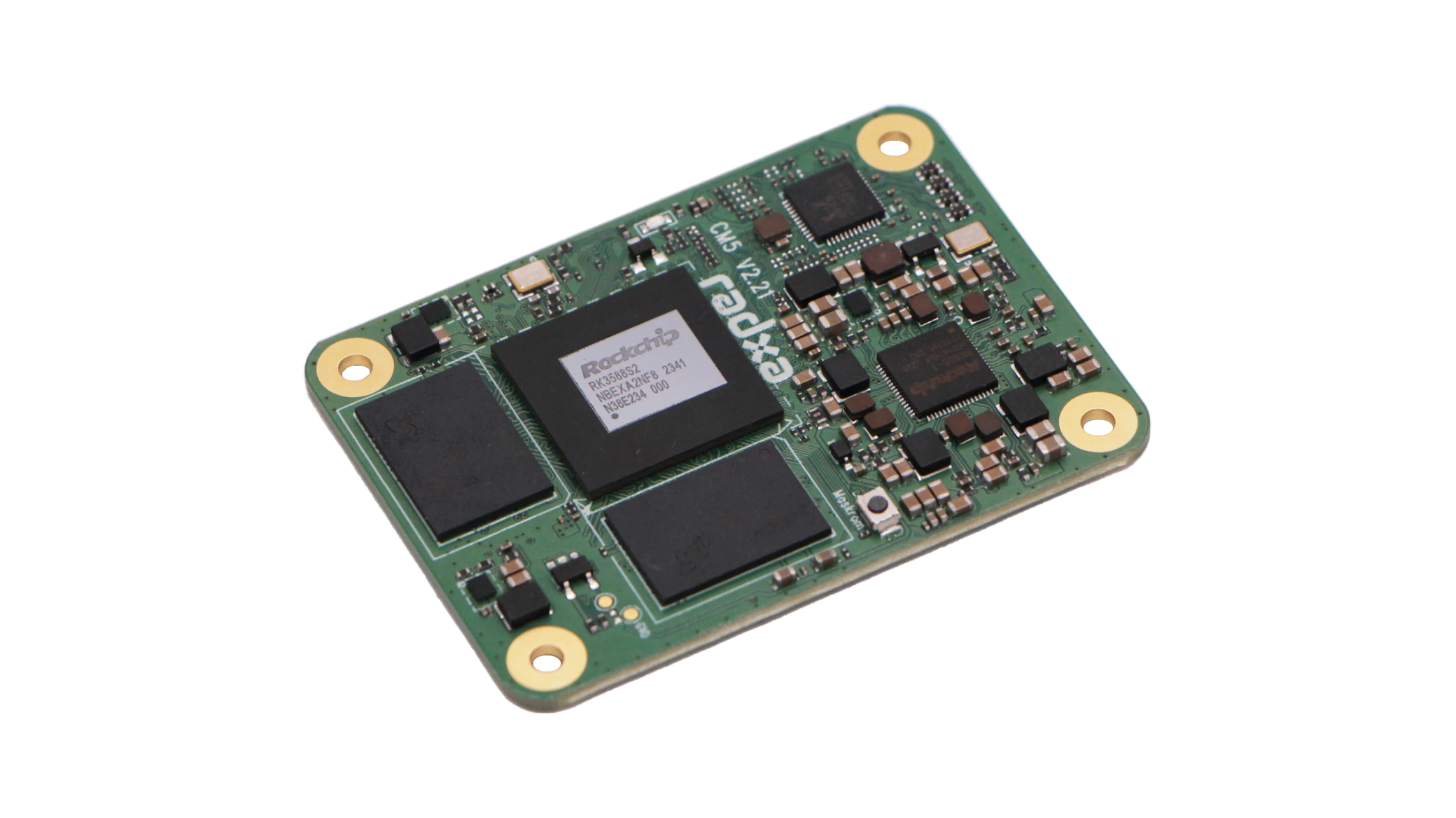
Radxa CM5

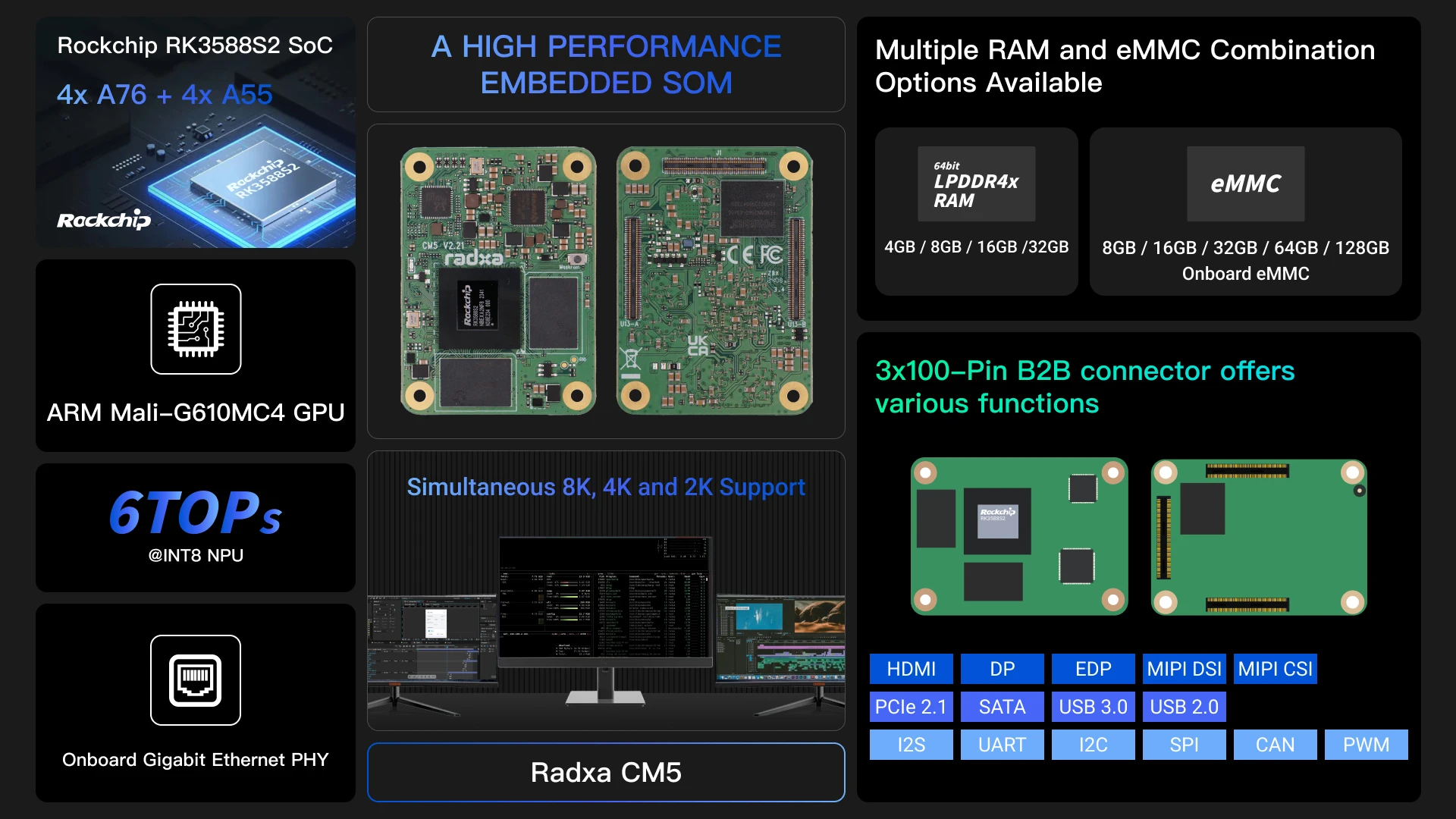
We are excited to announce the official release of the Radxa CM5, our latest high-performance compute module. Developed on the Rockchip RK3588S2 and RK3582 SoCs, the Radxa CM5 is designed to offer unparalleled power and flexibility to users. We anticipate it will excel in a variety of demanding applications, including but not limited to edge computing, deep learning, and embedded system development.

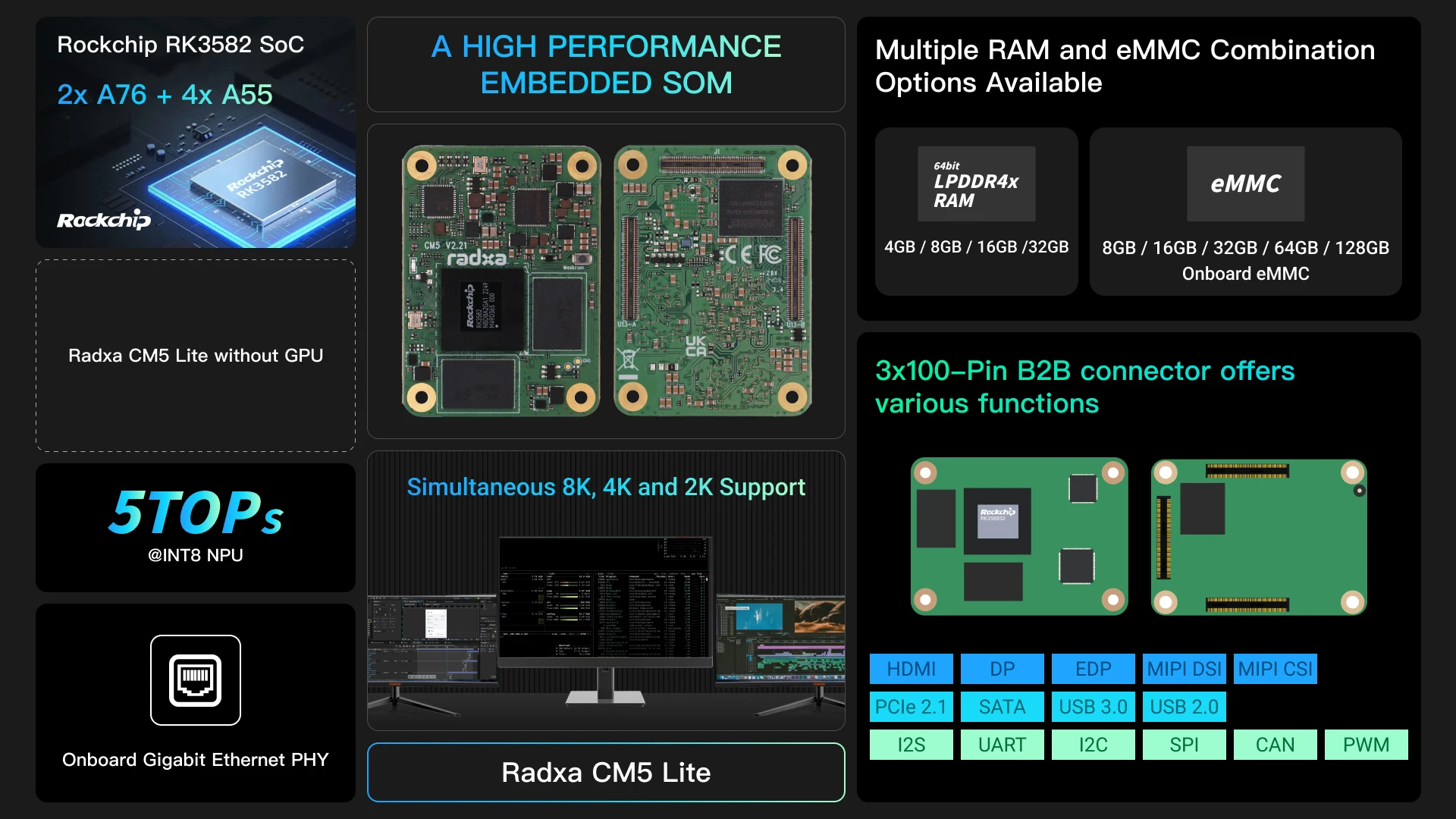
Here are the main differences between the Radxa CM5 and the Radxa CM5 Lite:

SpecRadxa CM5Radxa CM5 Lite
SoCRockchip RK3588S2Rockchip RK3582
CPUQuad Arm Cortex®-A76 and Quad Arm Cortex®-A55Dual Arm Cortex®-A76 and Quad Arm Cortex®-A55
GPUArm Mali-G610MC4No GPU
NPU6TOPs@INT85TOPs@INT8
MultimediaH.265 and VP9 decoder by 8K@60fps, H.264 decoder by 8K@30fps, AV1 decoder by 4K@60fps, H.264 and H.265 encoder by 8K@30fpsH.264 and H.265 encoder by 4K@60fps

Continuous Evolution

Since the development of the Radxa CM5 began, we have been actively listening to community feedback and continuously improving our product. In the latest V2.21 version, we paid special attention to user demand for onboard eMMC. As a result, compared to the initial release, V2.21 introduces an eMMC storage option, aiming to support applications that require faster data access speeds and increased storage reliability. Additionally, we have significantly enhanced the hardware compatibility of the module. Now, the Radxa CM5 can not only seamlessly integrate with our existing accessory ecosystem but also work with a broader range of third-party development boards and IO expansion boards. These advancements make the Radxa CM5 one of the most flexible and compatible compute modules on the market.

Expanded Compatibility

The design philosophy of the Radxa CM5 has always centered around compatibility and user-friendliness. We are proud to announce that the Radxa CM5 is now compatible with leading hardware platforms in the industry, including the CM5 IO Board, Super 6c, and the RPi CM4 IO Board. This expanded compatibility ensures that the Radxa CM5 can be effortlessly integrated into the existing Raspberry Pi ecosystem while also providing additional options for developers who want to leverage the capabilities of modern processors. Whether for rapid prototyping or deployment in production environments, the extensive compatibility of the Radxa CM5 simplifies the development process and accelerates project implementation.

Designed for GPU-free Requirements -- Radxa CM5 Lite

For scenarios that do not require GPU acceleration, the Radxa CM5 Lite offers an ideal solution. Although it lacks a GPU, this does not hinder its excellent performance in pure computational tasks, particularly in edge computing, industrial automation, and Internet of Things (IoT) devices. The design of the Radxa CM5 Lite takes into account cost-effectiveness and power consumption optimization, making it a perfect choice for running a variety of applications in GPU-less environments. Whether for data processing, intelligent control, or serving as a lightweight server, the CM5 Lite delivers stable and efficient performance.

User Case: Handheld Gaming Console

The impressive power and versatility of the Radxa CM5 make it an ideal candidate for a variety of innovative projects. A prime example is its application in the development of handheld gaming devices. Thanks to its high-performance processor and graphic capabilities, gaming enthusiasts can enjoy a smooth gaming experience, even when playing graphically intensive and complex games. The compact size and capabilities of the CM5 make it a perfect core for handheld devices. You can view this user case on Twitter at StonedEdge.

Radxa CM5 IO Board

When paired with the specially designed Radxa CM5 IO Board, the Radxa CM5 provides a complete development platform that makes accessing and testing Radxa's rich array of accessories straightforward. We encourage users to visit the Radxa CM5 IO Board page to learn more about the details of compatible accessories and how to fully harness the potential of the CM5 module for their custom projects. This powerful combination offers hardware developers unprecedented flexibility, whether for rapid prototyping or mass production, the Radxa CM5 and its IO Board can meet your needs.

Special Time-limited Discount

Radxa CM5 is now available at an introductory special price. Whether you're looking for a cost-effective solution for your project or you need a higher specification of performance, the Radxa CM5 series has got you covered.

For budget-conscious applications that do not require a GPU, the CM5 Lite offers three configurations at the following prices:

  • 4GB RAM + 32GB eMMC for $55.00
  • 8GB RAM + 64GB eMMC for $75.00
  • 16GB RAM + 128GB eMMC for $90.00

For users in need of more powerful performance, the CM5 series also offers three different configurations to support more complex applications and projects:

  • 4GB RAM + 32GB eMMC for $69.00
  • 8GB RAM + 64GB eMMC for $89.00
  • 16GB RAM + 128GB eMMC for $105.00

Radxa CM5 Leaflet

Radxa CM5 Lite Leaflet

Radxa ZERO 2 Pro in Stock

· 2 min read

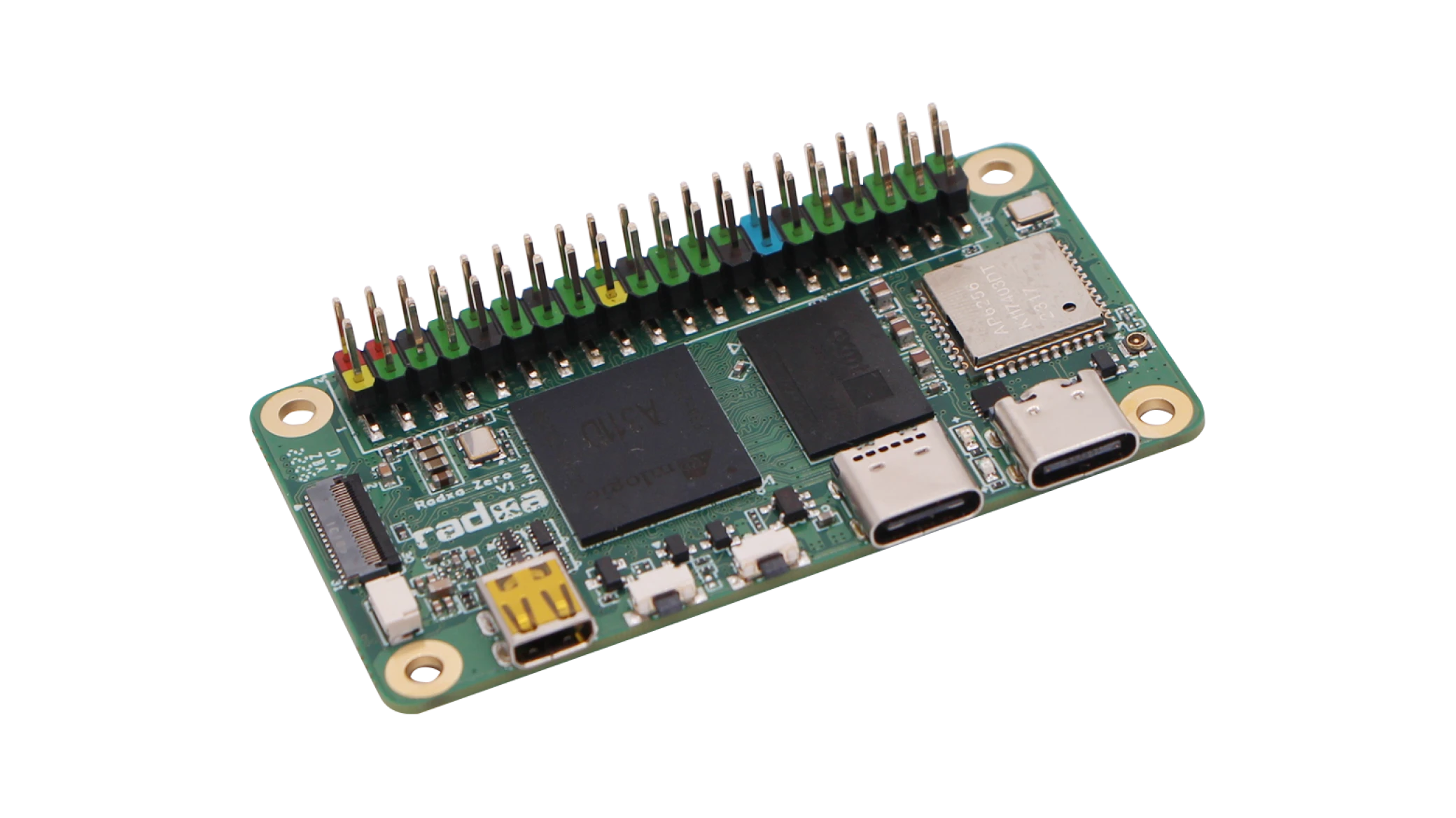
Radxa ZERO 2 Pro

Today, with great excitement, we announce that the highly anticipated latest batch of Radxa ZERO 2 Pro is officially available for purchase. This high-performance Tiny SBC will be available globally through Arace and its authorized distributors, bringing an unparalleled technological feast to tech enthusiasts worldwide.

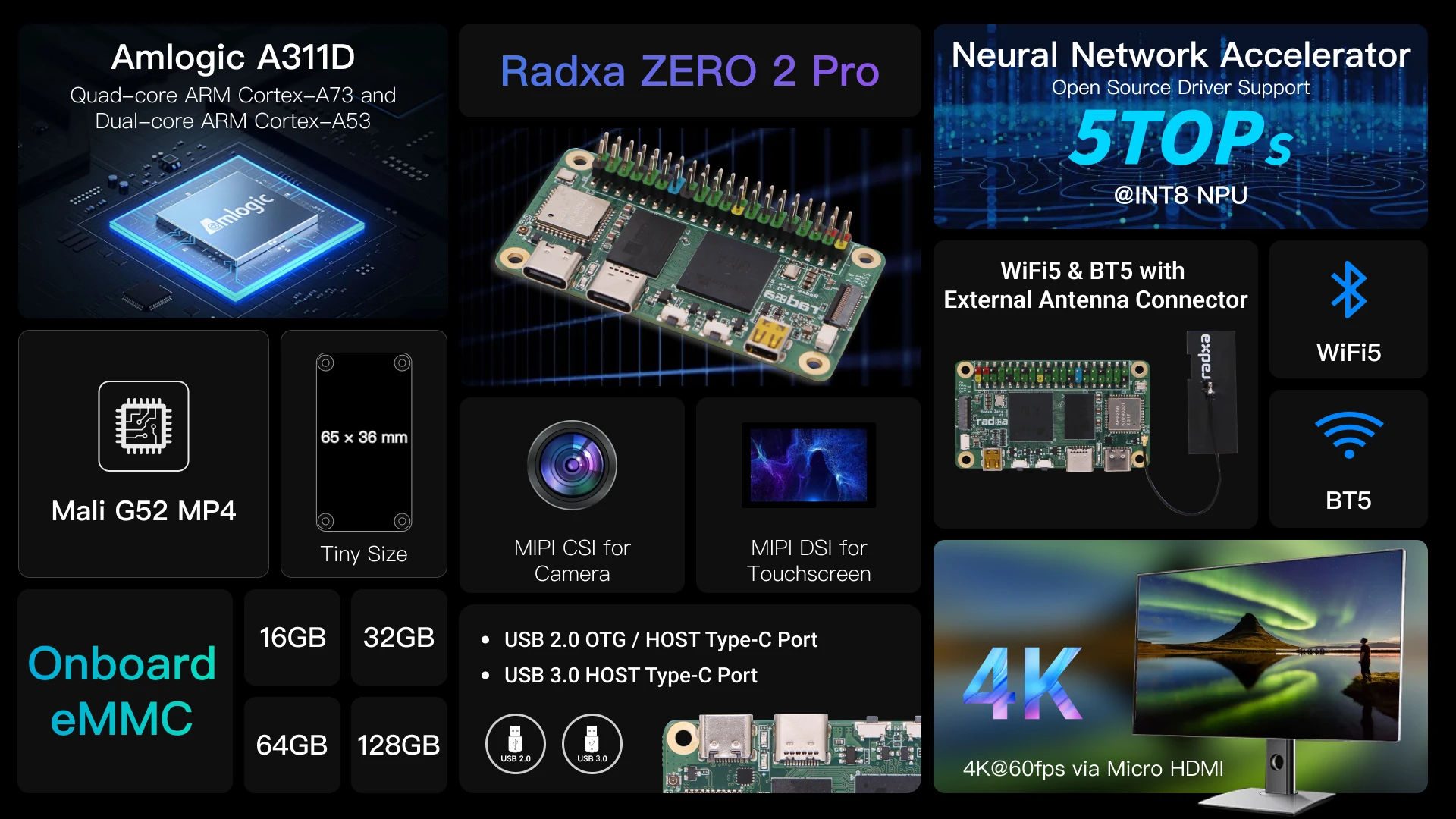
Renowned for its powerful performance and compact size, the Radxa ZERO 2 Pro measures just 65mm x 36mm. As a high-performance miniature single board computer, it not only maintains its classic compact design but also achieves a significant leap in performance. With outstanding processing speed and excellent energy efficiency, the Radxa ZERO 2 Pro aims to provide a more powerful and user-friendly platform for enthusiasts, developers, and geeks alike.

Here are the key hardware specifications of the Radxa ZERO 2 Pro:

  • SoC: Amlogic A311D
  • CPU: Quad-core Arm Cortex-A73 (Armv8) 64-bit @ 2.2GHz and Dual-core Arm Cortex-A53 (Armv8) 64-bit @ 1.8GHz
  • GPU: Arm G52 MP4
  • NPU: Computing Power up to 5 TOPs, with support for open-source drivers
  • LPDDR4 RAM Up to 8GB
  • Onboard eMMC Up to 64GB
  • WiFi 5 & Bluetooth 5, equipped with an external antenna connector
  • 1x USB 2.0 OTG / HOST Port for Data and Power
  • 1x USB 3.0 HOST Port
  • 1 x Micro HDMI Up to 4K@60fps
  • 1 x 4-lane MIPI DSI for MIPI LCD
  • 1 x 4-lane MIPI CSI for Camera
  • 40 x color user GPIO supporting various interface options

Act now! The latest batch of Radxa ZERO 2 Pro is now on the market. We invite tech enthusiasts and geeks worldwide to visit the Radxa ZERO 2 Pro website or authorized(Arace) distributors for more information and to purchase your Radxa ZERO 2 Pro. Join us on this innovative journey and explore endless possibilities!

Radxa ZERO 2 Pro

Radxa ROCK 5C Launch

· 2 min read

Radxa ROCK 5C

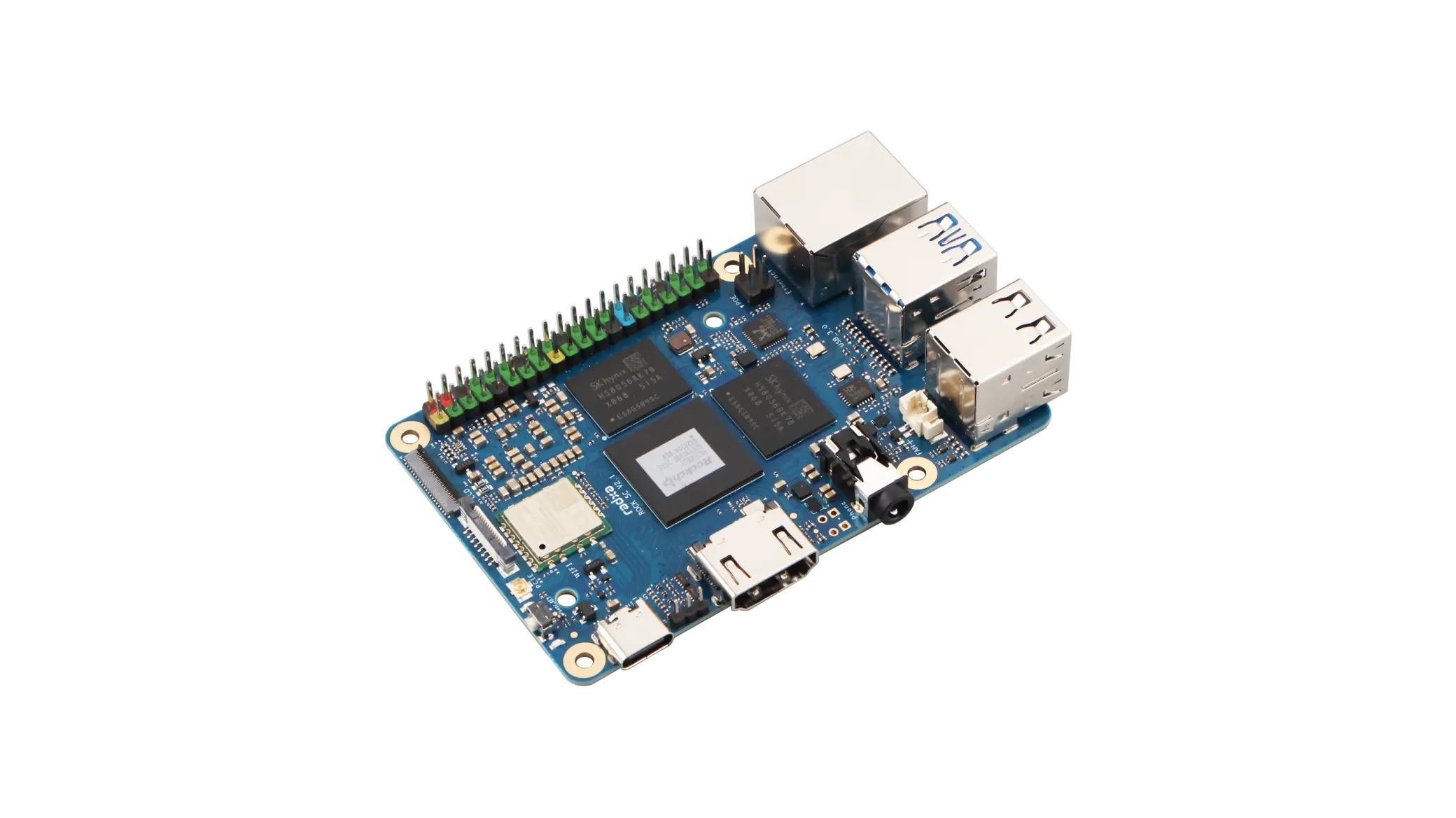
Radxa has officially unveiled its new generation of ROCK single-board computer - the Radxa ROCK 5C. As the latest flagship in the ROCK 5 series, ROCK 5C not only inherits the exceptional performance of its predecessor but also achieves significant improvements and upgrades in both functionality and design.

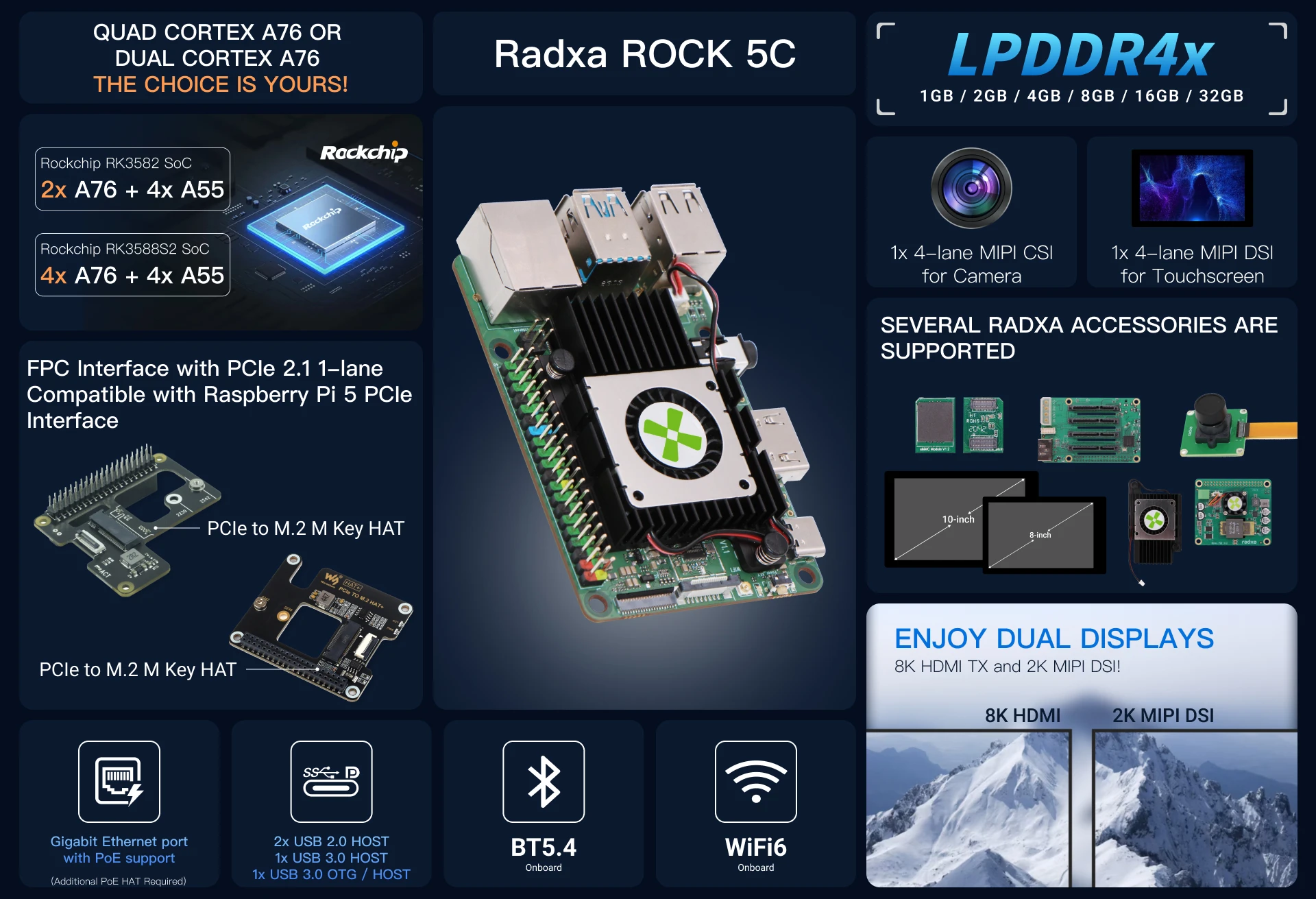
In terms of core configuration, ROCK 5C offers two SoC options: RK3582 and RK3588S2, catering to the needs of different user groups. Equipped with powerful Arm Cortex-A76 and Arm Cortex-A55 processors, it ensures outstanding performance across various application scenarios. Furthermore, ROCK 5C's camera, display, and etc interfaces have received comprehensive support from the Radxa accessory series, providing users with more possibilities and convenience, further enriching Radxa's hardware ecosystem.

Regarding functional expansion, ROCK 5C introduces a PCIe 2.1 interface through an FPC connector, significantly enhancing its expansion flexibility. Users can easily perform SSD expansion, SATA expansion, 2.5G Ethernet expansion, and more, providing robust support for different application scenarios. Additionally, ROCK 5C comes with WiFi 6 and BT 5.4 wireless modules, further boosting its capabilities in wireless communication.

In terms of pricing, the Radxa ROCK 5C Lite is priced at $29.9 for the 1GB variant, while the top configured 16GB variant retails at $104.9. Similarly, the Radxa ROCK 5C is priced at $49.9 for the 2GB version, while the top-of-the-line 32GB version retails for $199.9.

Radxa ROCK 5C